
E944 | What Do We Do About Youth Sports Specialization?
Aug 11, 2026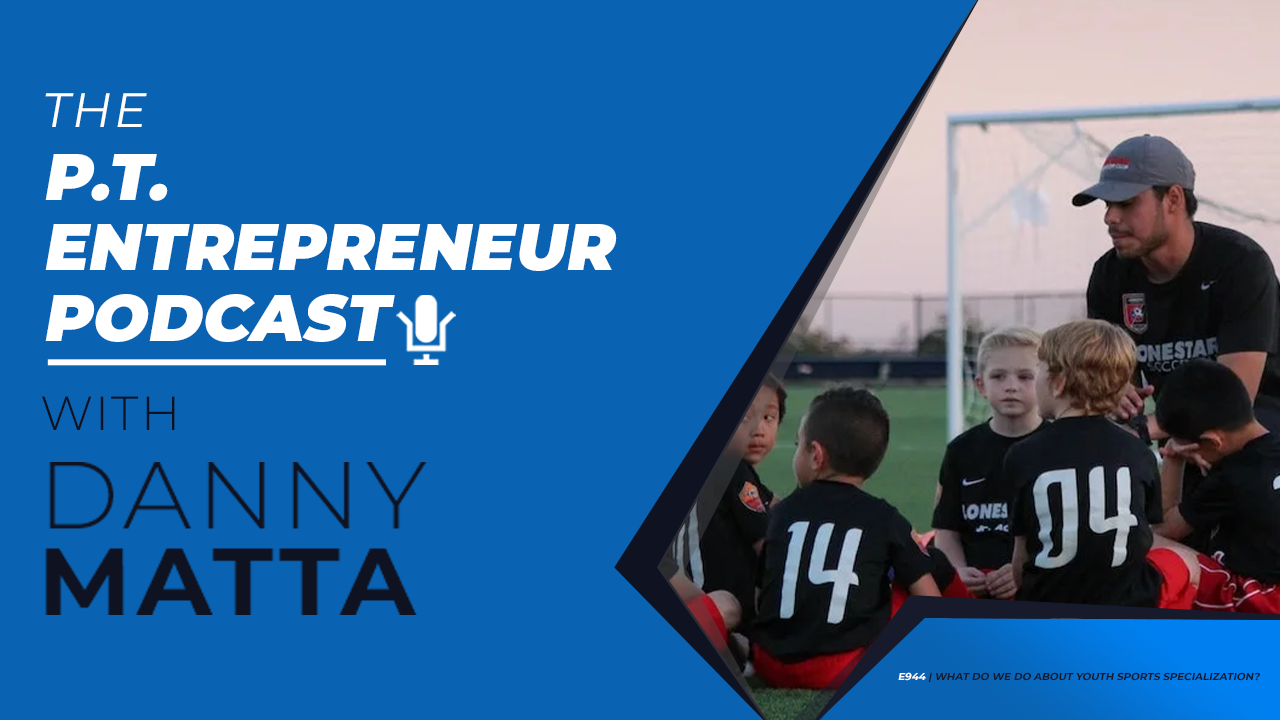
The Youth Sports Boom Is Creating a Massive Opportunity for Physical Therapists
Youth sports have changed.
A lot.
What used to be seasonal participation has become year-round competition.
Travel teams.
Club programs.
Private coaching.
Select leagues.
Strength training.
Showcases.
Specialization starts earlier, seasons overlap more often, and parents are spending more money than ever trying to help their kids succeed.
That shift has created a massive industry.
It has also created a massive need for physical therapists who understand what healthy long-term athletic development actually looks like.
In this episode of the PT Entrepreneur Podcast, Doc Danny breaks down why youth sports have become such a powerful business opportunity for physical therapists, where the biggest health risks are showing up, and how clinic owners can position themselves as trusted advocates inside these communities without simply criticizing the system from the outside.
Youth Sports Look Completely Different Than They Used To
A few decades ago, most kids played whatever sport was in season.
Basketball in the winter.
Baseball in the spring.
Football in the fall.
Maybe swimming in the summer.
There was more natural variety.
There was more exposure to different movement patterns.
There was also more downtime between sports.
Today, that model is disappearing.
Many young athletes are specializing earlier and playing the same sport year-round.
Soccer players may never stop playing soccer.
Baseball players may throw almost continuously.
Swimmers may train twelve months a year.
Gymnasts may specialize before most kids have even tried multiple sports.
The system has become more competitive, more organized, and much more financially sophisticated.
Specialization Comes With a Cost
There are clear consequences when kids repeat the same movement patterns over and over again without much variation.
Overuse injuries become more common.
The same tissues are stressed repeatedly.
Recovery windows shrink.
The athlete loses opportunities to build different movement skills.
Danny points to the kinds of problems physical therapists increasingly see in younger athletes:
Chronic shin pain.
Foot and ankle pain.
Shoulder irritation.
Elbow problems.
Repetitive stress injuries.
Those issues are often not the result of one bad movement.
They are the result of doing the same thing thousands of times without enough variation or recovery.
Variety Matters More Than Most Parents Realize
One of the strongest ideas in the episode is the value of sports sampling.
Instead of deciding at age seven that a child is now a baseball player or soccer player, let them try multiple sports.
Basketball.
Swimming.
Soccer.
Track.
Golf.
Martial arts.
Whatever interests them.
Different sports challenge the body in different ways.
They also expose kids to different social environments, movement patterns, coaching styles, and types of problem-solving.
That variety may help reduce repetitive stress while also improving overall athletic development.
There is also a creativity component.
When athletes learn to move in different environments, they build a wider base of physical solutions.
That makes them more adaptable.
Parents Are Under Enormous Pressure
This issue is not as simple as telling parents to stop specializing their kids.
There is a social component.
Your child's friends may all move to the next competitive team.
Their parents become your friends.
The club tells you your child needs to train year-round.
You worry that if your child steps away for a season, they will not make the team when they return.
That pressure is real.
Danny talks about experiencing it with his own family.
Even when you understand the data and deliberately want your kids exposed to different sports, it can still be difficult to go against the structure around you.
That is why simply telling parents they are doing it wrong usually does not help.
They need someone who understands the system and can help them navigate it.
Money Has Changed the Youth Sports Conversation
The youth sports industry is now enormous.
Danny compares it to the size of the physical therapy industry itself.
That alone should get clinic owners' attention.
There is more private money.
More organized competition.
More private coaching.
More investment in facilities.
More focus on development.
And now there is another factor driving parental behavior.
College athletics.
Scholarships.
NIL opportunities.
Revenue sharing.
Parents see young athletes making significant money at major college programs, and that can make sports feel less like an extracurricular activity and more like an investment.
The problem is the odds remain extraordinarily low.
Danny points out that only a tiny percentage of youth athletes ever become professional athletes.
Even within professional sports, earning potential varies dramatically.
The dream is possible.
It is just incredibly rare.
The Goal Should Be Bigger Than a Scholarship
Sports can provide much more value than simply creating a path to college or professional competition.
Kids learn how to work.
They learn how to lose.
They learn how to practice.
They learn teamwork.
They develop discipline.
They learn how to handle frustration.
They learn how to commit to something.
Those benefits exist whether the athlete earns a scholarship or never competes beyond high school.
That should matter.
The ultimate goal should not simply be creating elite athletes.
It should be creating healthy people who develop a positive relationship with movement, competition, and effort.
The Best Athletes Usually Have More Than Training
Danny also makes an important point about elite athleticism.
Training matters.
Deliberate practice matters.
Coaching matters.
But elite athletes also tend to possess exceptional physical traits.
Professional basketball players are unusually large, powerful, and coordinated.
NFL athletes are built differently.
Major League Baseball players tend to have extraordinary hand-eye coordination and physical capabilities.
There are real genetic advantages involved.
Training amplifies those traits.
It does not create all of them from nothing.
That perspective can be helpful for parents.
You can support your child's development without treating every season like a direct path to a professional career.
Internal Motivation Matters More Than External Pressure
Long-term excellence requires deliberate practice.
And deliberate practice is difficult.
It is repetitive.
It is often boring.
It happens when nobody is watching.
That type of effort is very hard to sustain when it is being driven entirely by a parent.
The athlete has to want it.
Danny references the idea of watching what a child chooses to practice independently.
What do they naturally return to?
What do they enjoy enough to work on without being forced?
Those signals matter.
If a child develops a genuine internal drive toward one sport later on, specialization may eventually make more sense.
That is very different from forcing specialization before the athlete has even had time to discover what they enjoy.
Physical Therapists Have an Important Role Here
This is where the opportunity begins.
Physical therapists understand load.
Recovery.
Movement variability.
Injury risk.
Strength.
Capacity.
Development.
We understand what happens when repetitive stress exceeds what the body can tolerate.
That puts PTs in a unique position to help families make better decisions.
The answer is not necessarily fighting the entire youth sports system.
That is probably unrealistic.
The industry is too large.
The infrastructure is already built.
The better strategy is to become a trusted advocate inside it.
That means helping athletes stay healthier.
Helping parents understand what they are seeing.
Helping coaches recognize when something needs to change.
And helping everyone make smarter decisions without treating the entire system like the enemy.
Become Part of the Youth Sports Community
One of the smartest moves a clinic can make is embedding itself inside local sports organizations.
Not through aggressive marketing.
Through service.
Danny describes establishing structured triage hours with soccer clubs.
The clinic creates a consistent time where athletes and parents can come in with questions.
A PT can evaluate what is happening.
They can provide guidance.
They can identify whether the athlete is safe to continue.
They can recommend modifying activity.
They can identify when formal treatment is needed.
They can also recognize when something requires referral to another provider.
That creates enormous value for the organization.
And it creates trust.
Triage Hours Solve a Real Problem
Parents are often confused when a child gets hurt.
Is this serious?
Do we need imaging?
Can they play this weekend?
Should they rest?
Do we need an orthopedic appointment?
Those questions create stress.
Having a trusted physical therapist already embedded in the club can dramatically reduce that uncertainty.
Sometimes the answer is reassurance.
Sometimes the athlete needs treatment.
Sometimes the best recommendation is simply changing training volume.
Sometimes the situation requires a specialist.
The important part is that families have someone they trust helping them make the decision.
That is far more valuable than simply handing out business cards at a tournament.
Parents Often Need an Objective Voice
One of the most valuable roles a physical therapist can play is helping families see the situation clearly.
Parents are emotionally invested.
Coaches are invested in the team.
Kids may feel pressure from both sides.
That can make it difficult to separate what is best for the athlete from what is best for the season.
A PT can step into that environment as a neutral advocate.
Sometimes that means telling a parent their child probably needs more recovery.
Sometimes it means explaining that the current pain is not something to ignore.
Sometimes it means helping the athlete have a conversation they have been avoiding.
Danny points out that kids will occasionally say things to clinicians that they have not said to their parents.
They may admit they are tired of the sport.
They may say they do not enjoy practice anymore.
They may feel burned out.
Those conversations matter.
The goal is not to tell a family what decision to make.
The goal is to create enough clarity that they can make a better one.
Burnout Can Be Just as Important as Injury
Physical therapists naturally pay attention to tissue stress and overuse.
But sometimes the bigger issue is that the athlete simply does not want to keep doing the same thing.
Danny shares an example of a young baseball player who had played year-round for years.
He was good.
Very good.
He had the ability to continue down that path.
The problem was that he was done with baseball.
By the time he reached high school, he wanted something different.
He stopped playing.
Then he tried swimming.
Golf.
Ultimate Frisbee.
Other activities that were new to him.
And suddenly he enjoyed sports again.
That story is important because not every successful youth sports outcome ends with specialization.
Sometimes success means helping a kid rediscover why they liked sports in the first place.
You Do Not Have to Fight the Entire System
It would be easy to look at the youth sports industry and decide the whole thing needs to change.
Maybe parts of it do.
But that does not mean a clinic owner needs to stand outside the system criticizing everyone involved.
Danny's approach is more practical.
Work inside it.
Become useful.
Educate parents.
Support coaches.
Help athletes.
Provide better information.
The structure may not change overnight.
But your presence can improve the experience for the families around you.
That is a much more productive position.
This Can Also Become a Powerful Business Channel
Helping the community and growing your practice are not mutually exclusive.
In fact, this is one of the best examples of how the two can work together.
When your clinic becomes a trusted resource inside a youth sports organization, you naturally become exposed to:
Athletes.
Parents.
Coaches.
Administrators.
Other healthcare professionals.
That creates a network effect.
The parents who trust you with their kids may also become patients themselves.
Many of them are active adults.
They run.
They lift.
They play recreational sports.
They want to stay healthy enough to keep doing those things.
That makes them a natural fit for many cash-based physical therapy practices.
Trust Compounds Inside Communities
This ties directly into one of the recurring themes on the PT Entrepreneur Podcast.
Trust compounds.
One good interaction leads to another.
A parent brings their child to triage hours.
You give honest advice.
They tell another parent.
A coach sees that you are helpful.
They start sending athletes your way.
The club begins viewing your clinic as part of the support system.
Over time, you stop being another business trying to market to athletes.
You become part of the community.
That is a very different position.
And it is much harder for competitors to replicate.
This Is How Super Brand Ambassadors Are Created
The strongest referrals rarely come from a clever campaign.
They come from people who have experienced your value firsthand.
A parent who trusts you with their child is likely to talk about you.
A coach who sees you help athletes make smart decisions is likely to recommend you.
An athlete who gets back to competition may tell teammates.
Those people become Super Brand Ambassadors.
They do not need a referral script.
They already believe in what your clinic does.
That is what makes community-based growth so powerful.
Youth Sports Partnerships Can Be Highly Defensible
Digital marketing can be copied.
Another clinic can run similar ads.
They can build a similar website.
They can target the same keywords.
Relationships are harder to copy.
If your clinic has spent years supporting a soccer club, educating parents, helping coaches, and taking care of athletes, another practice cannot recreate that trust overnight.
That makes these relationships incredibly valuable.
They become an insulated growth channel.
One that is based on reputation rather than advertising spend.
The Opportunity Is Bigger Than Treating Injuries
A clinic does not need to wait until someone gets hurt.
Youth sports partnerships can include:
Injury triage.
Parent education.
Coach education.
Recovery guidance.
Strength and conditioning.
Return-to-sport planning.
Performance services.
Injury prevention.
Long-term athlete development.
The more useful your clinic becomes, the deeper the relationship becomes.
And the deeper the relationship becomes, the more naturally referrals happen.
Help Parents Make Better Decisions
One of the biggest opportunities is education.
Most parents are trying to do the right thing.
They simply do not always have enough information.
They want to know:
How much training is too much?
Should my child specialize?
When should they take time off?
Is this pain normal?
Should they keep playing?
Do we need to see someone?
Should they strength train?
What does healthy long-term development actually look like?
Physical therapists can answer those questions in a practical way.
That creates value long before anyone becomes a paying patient.
Specialization May Eventually Make Sense
Danny is not arguing that specialization is always bad.
At some point, it may make sense.
As athletes get older, competition increases.
High school sports become more selective.
College opportunities become more realistic for a smaller group of athletes.
Eventually, an athlete may decide they truly love one sport and want to invest more heavily in it.
That is different from making an eight-year-old choose one sport before they have explored anything else.
The timing matters.
So does the motivation behind the decision.
The Goal Is Better Long-Term Athletes
Physical therapists have a unique opportunity to redefine what success looks like in youth sports.
The goal should not simply be:
Play more.
Train more.
Compete more.
The goal should be helping athletes build enough capacity to stay healthy and enjoy the sport for as long as they choose to play it.
That means balancing:
Performance.
Recovery.
Variety.
Strength.
Skill development.
Mental health.
Enjoyment.
The best youth sports system is not necessarily the one that produces the most elite twelve-year-olds.
It is the one that helps athletes develop in a way they can sustain.
The Business Opportunity Comes From Doing the Right Thing
The most important part of this strategy is authenticity.
Do not join a soccer club because you want a list of leads.
Join because you can genuinely help.
Do not offer triage hours simply because you want evaluations.
Offer them because parents need guidance.
Do not educate coaches simply to get your logo in front of people.
Educate them because better decisions create healthier athletes.
When you consistently do the right thing, the business benefit follows naturally.
That is reciprocity.
And it is one of the strongest growth engines a local clinic can build.
Technology Spotlight
Documentation continues to be one of the biggest frustrations for physical therapists.
Claire is an AI scribe built specifically for PTs that dramatically reduces documentation time, allowing clinicians to focus on patient care instead of paperwork.
For a clinic that is trying to become more involved in local sports communities, that time matters.
The less time you spend catching up on notes, the more time you can spend building relationships, educating families, and supporting the organizations your patients are already part of.
👉 Try Claire free for 7 days
https://www.meetclaire.ai/?utm_source=preroll&utm_medium=podcast&utm_campaign=pt_entrepreneurs
More PT Biz Training
Want more content on building a scalable cash practice?
👉 PT Biz Training YouTube
https://www.youtube.com/@ptbiztraining
Final Thoughts
Youth sports are not getting smaller.
The industry is becoming more competitive, more specialized, and more financially significant.
That creates challenges.
But it also creates an enormous opportunity for physical therapists.
You can become the person who helps families navigate a confusing environment.
You can help athletes stay healthier.
You can educate coaches.
You can reduce unnecessary fear around injuries.
You can identify when something truly needs attention.
And in the process, you can build deep trust inside a community that naturally aligns with your practice.
You do not need to fight the youth sports industry from the outside.
Become a valuable part of it.
Help people make better decisions.
Earn trust.
And let the business growth compound from there.