
E938 | The Number One Skill You Need For A Successful Clinic
Jul 21, 2026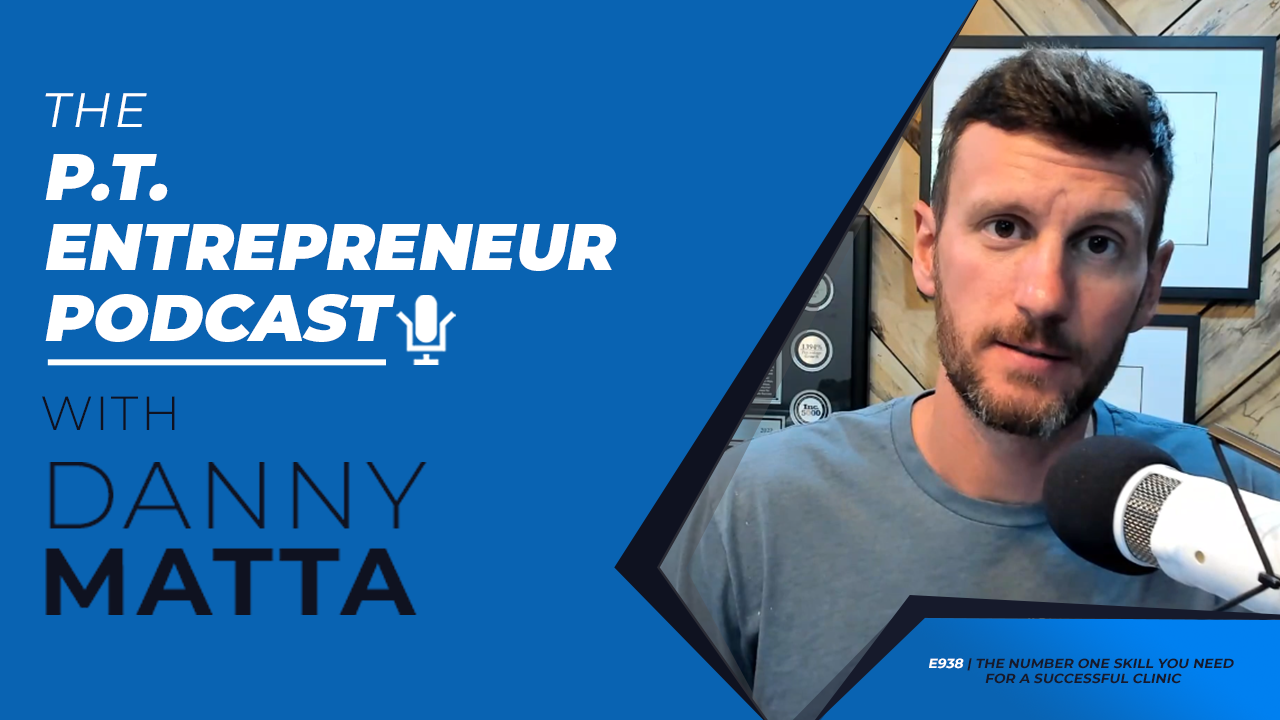
Why Understanding People Is the Greatest Leadership Skill You'll Ever Develop
Ask most clinic owners what the hardest part of growing their business is, and you'll hear a variety of answers.
Finding new patients.
Improving marketing.
Hiring clinicians.
Managing cash flow.
While all of those present challenges, there's one obstacle that eventually becomes bigger than all the others.
People.
The moment your practice grows beyond just you, your success becomes directly tied to your ability to lead, communicate with, and develop other human beings.
That's exciting.
It's also incredibly messy.
People have different personalities.
Different goals.
Different motivations.
Different family situations.
Different definitions of success.
Learning to navigate all of that is what ultimately separates great clinic owners from those who struggle to scale.
Building a Great Clinic Means Building Great Relationships
Many physical therapists dream about opening their own practice because they want more autonomy.
They want to treat patients differently.
Create a better experience.
Escape high-volume care.
Eventually, though, something changes.
The clinic grows.
A second clinician joins the team.
Then an office manager.
Then another therapist.
Suddenly your business isn't just about treating patients anymore.
It's about leading people.
That's a completely different skill set.
The Best Part of Business Is Also the Hardest Part
One of the greatest joys of owning a clinic is seeing your team succeed.
Watching a staff member buy their first home.
Helping someone pay off student loans.
Creating careers that people genuinely enjoy.
Those moments remind you why building a business matters.
You're no longer just changing patients' lives.
You're changing the lives of the people who come to work with you every day.
At the same time, people can also create your biggest frustrations.
Miscommunication happens.
Expectations become unclear.
Someone leaves for another opportunity.
Conflict appears when priorities no longer align.
Every business owner experiences these moments.
They're part of leading other human beings.
Everyone Makes Decisions Based on Their Own Goals
One lesson every clinic owner eventually learns is that people naturally make decisions based on what's best for them.
That's not selfish.
It's human nature.
An employee may decide to relocate closer to family.
Another might pursue a leadership opportunity elsewhere.
Someone else may decide entrepreneurship is their next chapter.
Those decisions aren't necessarily a reflection of your leadership.
They're often a reflection of changing priorities in someone else's life.
Understanding that allows you to respond with empathy instead of resentment.
If Everything Depends on People, Learn More About People
Here's a simple question every owner should ask themselves.
If almost everything I want in business comes through other people, shouldn't I become exceptionally good at understanding people?
The answer is obvious.
Leadership isn't about having all the answers.
It's about understanding what motivates others.
What they value.
What they're afraid of.
What kind of environment allows them to perform at their best.
The more accurately you understand those things, the stronger your business becomes.
Physical Therapists Already Have a Head Start
One of the greatest advantages physical therapists possess is something many don't even recognize.
High emotional intelligence.
Think about what you do every day.
You listen carefully.
You notice body language.
You recognize frustration.
You help people through fear, uncertainty, and pain.
You motivate patients to stick with difficult treatment plans.
Those aren't just clinical skills.
They're leadership skills.
The same emotional intelligence that helps someone recover from an injury also helps you build stronger relationships with your team.
Emotional Intelligence Is a Competitive Advantage
For years, emotional intelligence was dismissed as simply being "too sensitive."
Many clinicians probably heard that growing up.
In reality, emotional intelligence is one of the strongest predictors of long-term leadership success.
People who understand emotions communicate better.
They resolve conflict more effectively.
They build stronger relationships.
They create healthier cultures.
Those aren't soft skills.
They're business skills.
And they're often the reason one clinic thrives while another constantly struggles with turnover.
Understanding People Isn't the Same as Pleasing Everyone
There's an important distinction every owner has to learn.
Being empathetic doesn't mean saying yes to everything.
People leadership isn't about making everyone happy.
It's about making decisions that are best for the organization while treating every individual with respect.
Sometimes those decisions are difficult.
You may have to hold someone accountable.
Set clearer expectations.
Say no to a request.
Have an uncomfortable conversation.
Great leaders don't avoid those moments.
They navigate them with honesty and empathy.
Leadership Lives in the Middle
Many clinic owners naturally drift toward one of two extremes.
Some become chronic people pleasers.
They avoid conflict.
They struggle to set boundaries.
Everyone gets their way except the business.
Progress stalls because no one is aligned around a common vision.
Others move to the opposite extreme.
They become overly direct.
Every conversation feels transactional.
Feedback becomes criticism.
Employees feel unheard.
Eventually good people leave.
Neither approach creates sustainable growth.
The best leaders live somewhere in the middle.
They care deeply about people while remaining committed to the vision of the business.
Psychology Has Always Been Part of Physical Therapy
Many PTs remember taking psychology courses during college and wondering why they were required.
Later, it all starts making sense.
Helping someone recover from an injury isn't simply about prescribing exercises.
It's about understanding behavior.
Motivation.
Fear.
Confidence.
Belief.
Every successful treatment plan depends on getting another human being to consistently make positive decisions.
That's psychology.
The same principles apply inside your business.
Helping employees grow requires understanding the person before trying to improve performance.
Leadership begins with curiosity.
Not assumptions.
Great Leaders Ask Better Questions
Instead of asking, "Why isn't this employee motivated?"
Great leaders ask:
"What are they trying to accomplish?"
"What matters most to them?"
"How can I help them succeed while moving the business forward?"
Those questions create alignment.
When an employee's goals and the company's goals begin supporting one another, momentum follows.
People become more engaged.
Communication improves.
Culture strengthens.
And everyone wins.
Your Business Will Magnify Who You Already Are
One reality every business owner eventually discovers is that your clinic amplifies both your strengths and your weaknesses.
If you're naturally organized, your systems become stronger.
If you're an excellent communicator, your culture improves.
If you're patient and empathetic, people enjoy working with you.
But the opposite is also true.
If you avoid difficult conversations, small issues become major problems.
If you're overly confrontational, good employees eventually leave.
If communication is inconsistent, confusion spreads throughout the organization.
Your business has a way of exposing the leadership habits you didn't realize you had.
That's why personal growth is never separate from business growth.
They're the same thing.
Staff Turnover Usually Starts Long Before Someone Quits
Most owners are surprised when an employee resigns.
In reality, the decision was often building for months.
Miscommunication.
Unclear expectations.
Lack of opportunity.
Feeling unheard.
Or simply two people moving toward different goals.
That doesn't automatically mean someone failed.
Sometimes great employees simply outgrow the opportunities available.
Sometimes the business changes.
Sometimes life changes.
The important lesson isn't trying to prevent every departure.
It's understanding why it happened so you can become a better leader going forward.
Communication Solves More Problems Than Policies
Many owners assume they need more systems.
More meetings.
More policies.
More checklists.
Those things have value.
But they rarely solve the underlying issue if communication is weak.
Most workplace problems begin with assumptions.
An employee assumes you meant one thing.
You assume they understood something else.
Weeks later, frustration appears.
The best leaders communicate early, clearly, and often.
Not because they enjoy repeating themselves.
Because clarity builds trust.
Leadership Is Not a Checklist
One of the most common questions business owners ask is:
"What's the checklist for becoming a great leader?"
The truth is there isn't one.
Leadership is dynamic.
Every employee is different.
Every conversation is different.
Every challenge requires a slightly different approach.
That's why leadership feels much more like a relationship than a process.
It's something you practice every day.
Not something you complete.
Study Human Behavior Like You Study Clinical Skills
Most clinic owners spend years improving their clinical expertise.
They attend continuing education courses.
Read research.
Practice new treatment techniques.
Leadership deserves the same level of commitment.
Learning how people think.
What motivates them.
Why they make decisions.
How trust develops.
Those skills create returns that last far longer than almost any technical certification.
One of the most valuable books on this subject is Influence by Robert Cialdini, which explores why people say yes and the psychological principles behind decision-making.
Another timeless classic is How to Win Friends and Influence People by Dale Carnegie.
Neither book teaches manipulation.
They teach understanding.
And understanding people is one of the greatest competitive advantages any leader can develop.
Leadership Creates Compounding Results
One of the core ideas behind the Compounding Clinic is that small improvements create exponential results over time.
Leadership works exactly the same way.
Every meaningful conversation strengthens trust.
Every coaching moment develops confidence.
Every difficult conversation handled well builds respect.
Those moments seem small on their own.
Over months and years, they transform an organization.
Strong cultures aren't built through one inspiring speech.
They're built through thousands of consistent interactions.
Build a Business People Want to Stay In
The goal isn't simply hiring talented clinicians.
It's creating an environment where talented clinicians want to build their careers.
That happens when people feel heard.
When expectations are clear.
When accountability exists alongside support.
When leaders genuinely care about helping people succeed.
Culture isn't created by motivational posters or company retreats.
It's created by how people experience working with you every single day.
Final Thoughts
Growing a clinic eventually becomes less about treating patients and more about leading people.
That's both the greatest challenge and the greatest opportunity of business ownership.
The same emotional intelligence that makes you an exceptional physical therapist can also make you an exceptional leader.
Invest in understanding people.
Communicate clearly.
Lead with empathy while maintaining healthy boundaries.
Continue learning about psychology, motivation, and human behavior just as intentionally as you continue learning clinical skills.
Because at the end of the day, almost everything you want in business comes through other people.
The better you become at serving, understanding, and leading them, the more your clinic and your life will continue to grow.
Technology Spotlight
Documentation continues to be one of the biggest frustrations for physical therapists.
Claire is an AI scribe built specifically for PTs that dramatically reduces documentation time, allowing clinicians to focus on patient care instead of paperwork.
👉 Try Claire free for 7 days
https://www.meetclaire.ai/?utm_source=preroll&utm_medium=podcast&utm_campaign=pt_entrepreneurs
More PT Biz Training
Want more content on building a scalable cash practice?
👉 PT Biz Training YouTube