
E940 | The Three Key Traits Of A Great Physical Therapist Hire
Jul 28, 2026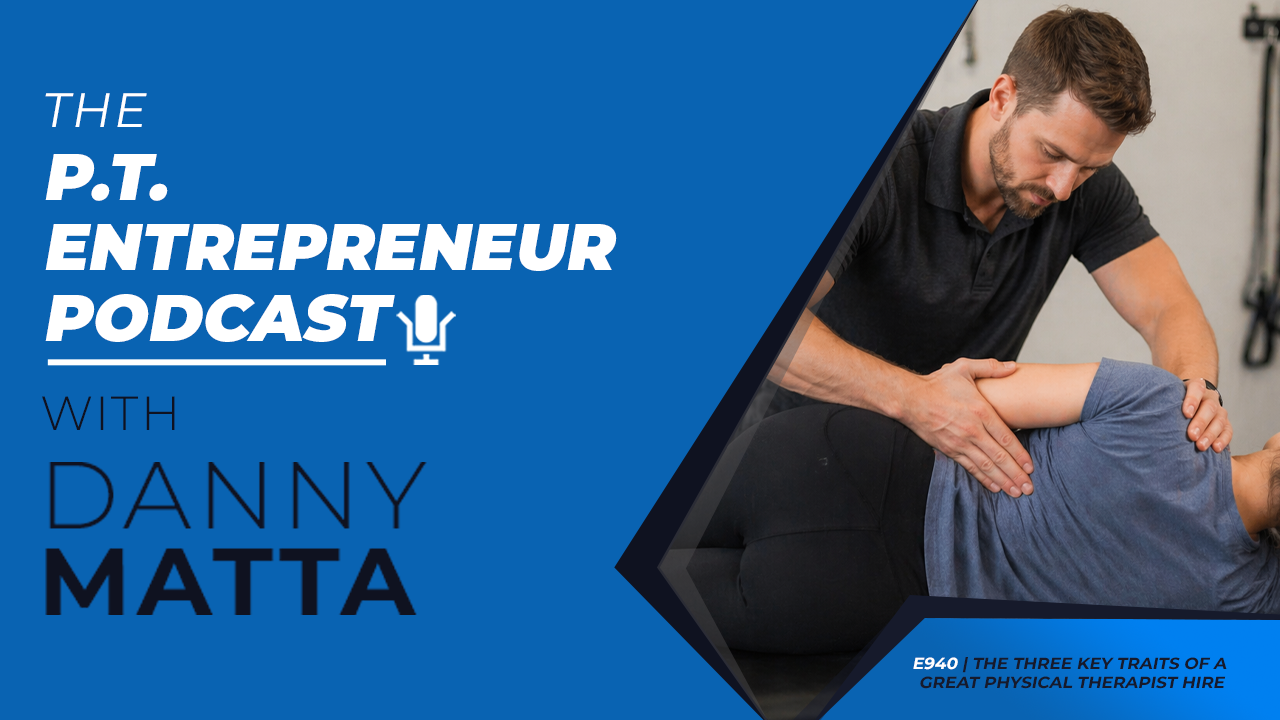
The 3 Traits That Make a Great Physical Therapist Hire
Hiring the right clinician can completely change the trajectory of a cash-based physical therapy practice.
The right person increases capacity, improves patient outcomes, strengthens the culture, and gives the owner room to focus on growth.
The wrong person can do the opposite.
A bad hire creates stress.
It drains time.
It damages trust.
It can even slow the business down more than not hiring at all.
That is why hiring should never be treated like a simple résumé review.
Degrees, certifications, experience, and clinical skills all matter. But they do not tell you everything you need to know about how someone will perform inside your clinic.
Some clinicians interview extremely well.
Some know exactly what to say.
Some may even remind you of yourself, which can make them feel like the obvious choice.
But similarity does not always equal fit.
In this episode of the PT Entrepreneur Podcast, Doc Danny explains the three foundational traits he prioritizes when hiring clinicians: clinical obsession, the ability to educate, and genuine empathy.
These traits are difficult to manufacture after someone joins the team.
Technical skills can be developed.
Systems can be taught.
Clinical weaknesses can be improved through mentorship and continuing education.
The deeper characteristics of the person are much harder to change.
A Great Hire Can Become the Linchpin for Growth
There comes a point when a clinic owner can no longer grow through personal effort alone.
The schedule is full.
Administrative demands are increasing.
Marketing still needs attention.
The team needs leadership.
At that stage, growth usually depends on adding the right people.
A strong clinician allows the clinic to help more patients without sacrificing the quality of care that built the business in the first place.
That is especially important in a cash-based practice.
Patients are not simply showing up because their insurance sent them there.
They chose the clinic.
They are investing their own money.
They expect a high level of expertise, communication, attention, and trust.
Every clinician you hire becomes part of that experience.
That means the hiring decision affects far more than the number of open appointments on the calendar.
It affects your reputation.
Why Experience Alone Can Be Misleading
Clinic owners often default to looking for the most experienced applicant.
That feels logical.
Someone with more years in practice should require less training and be ready to carry a full caseload sooner.
Sometimes that is true.
But experience does not automatically mean someone is still engaged in the profession.
A clinician may have ten years of experience but stopped actively improving five years ago.
Another clinician may have only three years of experience but spends every week studying, asking questions, seeking mentorship, and trying to get better.
Which person has the greater long-term upside?
In many cases, it is the less experienced clinician with the stronger internal drive.
You can teach systems.
You can improve clinical reasoning.
You can pay for continuing education.
You cannot easily teach someone to care deeply about improving.
That is why Danny would often rather hire someone who checks the foundational boxes but has less experience than someone with an impressive résumé who appears mentally checked out.
Trait #1: Clinical Obsession
The first trait is clinical obsession.
This does not mean the clinician has no boundaries or thinks about work every minute of the day.
It means patient outcomes matter to them personally.
When someone is not improving, they want to understand why.
They do not simply repeat the same treatment plan for another four visits and hope something changes.
They become curious.
They revisit the evaluation.
They look at the research.
They ask another clinician for perspective.
They watch a lecture or search for a better explanation.
They keep working on the problem because their reputation and the patient’s result matter to them.
Danny uses a simple interview question to uncover this trait:
If a patient is not progressing the way you expected on a Friday, does it materially affect your weekend?
The goal is not to hear that the candidate spends every Saturday worrying about work.
The goal is to understand whether unresolved clinical problems create genuine curiosity.
Do they want to figure it out?
Do they feel responsible for finding a better path?
Or can they completely ignore it because their appointment ended at 4:00?
Great Clinicians Never Fully Put It on Autopilot
The early years of clinical practice naturally involve rapid growth.
New clinicians are learning constantly.
They are seeing new diagnoses.
They are building pattern recognition.
They are learning how to communicate, motivate patients, and adjust care in real time.
After several years, the growth curve can flatten.
The clinician has seen many of the common presentations.
They are more comfortable.
They are more efficient.
That is where clinical obsession becomes even more important.
Some clinicians continue refining their reasoning.
They become more accurate.
They go deeper into a niche.
They study unusual presentations.
They improve small details that produce better outcomes.
Others begin operating on autopilot.
They rely on what they already know and stop questioning whether there might be a better approach.
For a performance-based cash clinic, that difference matters.
Patients are paying for expertise.
They expect the clinician to care about the outcome as much as they do.
Reputation Matters to the Best Providers
Clinically obsessed providers tend to care deeply about their reputation.
They do not view reputation as online popularity.
They view it as the quality of the work attached to their name.
When someone leaves their care, they want that person to feel heard, understood, and meaningfully improved.
That internal standard affects everything.
It affects preparation.
It affects follow-up.
It affects communication.
It affects how quickly the clinician asks for help when something is outside their current understanding.
That is the kind of person who strengthens a clinic’s reputation instead of merely filling open hours.
Trait #2: The Ability to Educate
The second trait is the ability and desire to educate.
Education is one of the biggest advantages a cash-based clinic can offer.
In a lower-volume setting, clinicians have time to explain what is happening.
They can help patients understand why the injury occurred, what needs to change, and how the plan of care fits together.
That clarity creates buy-in.
Without it, even a technically excellent treatment plan can fail.
Patients may not follow through.
They may become frustrated when progress is not immediate.
They may seek another opinion because they never fully understood the first one.
A great educator removes confusion.
The patient leaves thinking:
“I understand what is going on.”
“I understand what we are working on.”
“I understand why this plan makes sense.”
That moment is incredibly valuable.
The Best Educators Adjust to the Person in Front of Them
Danny shares an example involving his daughter, who had a shoulder issue related to swimming and volleyball.
The clinician did not simply give her exercises and send her home.
He used a whiteboard to explain the factors that contributed to the problem, how overload played a role, and what needed to happen for the shoulder to improve.
She left with clarity.
The same clinician could also work with an elite athlete or an older adult and adjust the explanation accordingly.
That is the mark of a strong educator.
They do not give the same speech to everyone.
They can increase or decrease the complexity based on the person’s knowledge, goals, age, and concerns.
That ability requires more than communication skills.
It requires depth of knowledge.
You have to understand something well before you can explain it simply.
Education Improves Outcomes and Sales
Education is not separate from the patient experience.
It is part of the intervention.
When patients understand the problem, they are more likely to commit to the solution.
That matters clinically.
It also matters financially in a cash-based practice.
Cash-pay clinicians must discuss plans of care, outcomes, timelines, and money directly with patients.
A clinician who can explain the value of the plan clearly will usually have an easier time helping someone make a confident decision.
This is not about pressure.
It is about clarity.
Patients are more comfortable investing when they understand what they are buying, why it matters, and how it connects to the outcome they want.
Look for Evidence That Someone Enjoys Teaching
You can often find signs of this trait in a clinician’s history.
Have they mentored students?
Have they led internal clinical education?
Do they regularly attend continuing education courses?
Have they taught workshops?
Do they enjoy explaining complex topics?
Do they come from environments where teaching was valued?
None of these automatically guarantee a great hire.
But together, they can help you identify someone who wants the time and responsibility that come with patient education.
Some clinicians want a lower-volume cash setting because they genuinely want deeper conversations with patients.
That is a strong signal.
Trait #3: Empathy and Emotional Intelligence
The third trait is empathy.
Physical therapy is built around relationships.
Patients arrive frustrated, scared, skeptical, confused, or disappointed.
Some have already tried other treatments.
Some have been dealing with pain for years.
Some are afraid they will never return to the activity they love.
The clinician has to understand more than the diagnosis.
They have to understand the person.
That requires listening.
It requires patience.
It requires noticing body language.
It requires asking thoughtful questions and being able to recognize what the patient is not saying directly.
A clinician can be extremely intelligent and still struggle if they lack empathy.
Technical Skill Cannot Replace Connection
Danny has seen highly talented clinicians become frustrated with the profession because they struggled with the human side of care.
They became jaded.
They became irritated by patients.
They lost the patience required to meet people where they were.
That does not mean they were bad people.
It may simply mean the profession was no longer the right fit.
But for a clinic owner, this is an important distinction.
You are not just hiring someone to identify impairments and prescribe exercises.
You are hiring someone to guide another human being through a difficult process.
Patients can feel whether a clinician truly cares.
They can also feel when someone is rushing, disengaged, or waiting for the appointment to end.
Empathy Also Matters During Sales Conversations
In a cash practice, clinicians often participate directly in sales.
That word makes some providers uncomfortable, but the process is really about helping someone decide whether the clinic is the right fit.
The clinician has to listen carefully.
They have to understand what the person wants.
They have to explain the path forward.
They have to discuss money without becoming awkward or defensive.
High emotional intelligence makes those conversations easier.
The clinician can recognize hesitation.
They can ask better follow-up questions.
They can separate a real objection from simple uncertainty.
They can help patients make a decision without making them feel pressured.
That is a major advantage in a cash-pay environment.
Use the Interview to Observe, Not Just Ask
You will not uncover these traits by asking generic interview questions alone.
Candidates usually prepare for those.
They know how to answer questions about strengths, weaknesses, and teamwork.
You need opportunities to observe them.
Mock evaluations are extremely helpful.
Watch how they greet the patient.
Notice whether they listen or immediately start explaining.
Pay attention to their body language.
See how they respond when they do not know something.
Ask them to explain a clinical concept to someone with no medical background.
Give them a case where the patient is not improving and ask what they would do next.
The specific answer matters.
But how they think and communicate may matter even more.
No Hiring Process Is Perfect
There is no interview framework that guarantees every hire will work out.
People are complicated.
Circumstances change.
Candidates may not fully understand what they want until they begin the role.
Clinic owners also have biases.
We naturally gravitate toward people who remind us of ourselves.
That can be helpful in some cases.
In others, it can create a team with the same strengths and the same blind spots.
The goal is not perfection.
The goal is improving the probability of making a great hire.
These three traits provide a strong foundation for doing that.
Hire for the Foundation and Train the Rest
Clinical obsession creates continuous improvement.
Education creates clarity and buy-in.
Empathy creates trust and connection.
When a clinician has all three, almost everything else becomes easier to build.
You can mentor them.
You can improve their systems.
You can help them develop stronger sales skills.
You can send them to continuing education.
You can sharpen their clinical decision-making.
But if they do not care about outcomes, do not enjoy educating patients, and struggle to connect with people, experience alone may not save the hire.
That is the central lesson.
Hire for the traits that are hardest to teach.
Then develop the skills that can be improved.
Technology Spotlight
Documentation continues to be one of the biggest frustrations for physical therapists.
Claire is an AI scribe built specifically for PTs that dramatically reduces documentation time, allowing clinicians to focus on patient care instead of paperwork.
That is especially valuable as your clinic grows and adds providers. A consistent documentation tool can reduce administrative strain across the team while giving clinicians more time to educate patients and build stronger relationships.
👉 Try Claire free for 7 days
https://www.meetclaire.ai/?utm_source=preroll&utm_medium=podcast&utm_campaign=pt_entrepreneurs
More PT Biz Training
Want more content on building a scalable cash practice?
👉 PT Biz Training YouTube
https://www.youtube.com/@ptbiztraining
Danny also references the Compounding Clinic series in this episode. That series provides a deeper look at building a clinic that grows through stronger systems, recurring services, and a team capable of delivering excellent care beyond the owner.
Final Thoughts
The best hire is not always the person with the longest résumé.
It is the person who cares deeply about patient outcomes, can create clarity through education, and has the empathy required to connect with people.
Those qualities form the foundation of a great cash-practice clinician.
Before making your next hire, look beyond credentials.
Ask better questions.
Observe how the candidate thinks.
Watch how they communicate.
Pay attention to how they respond when a patient is confused, frustrated, or not improving.
You can train skills.
It is much harder to train someone to care.