
E930 | A Simple Leadership Framework You Can Use In Your Clinic
Jun 23, 2026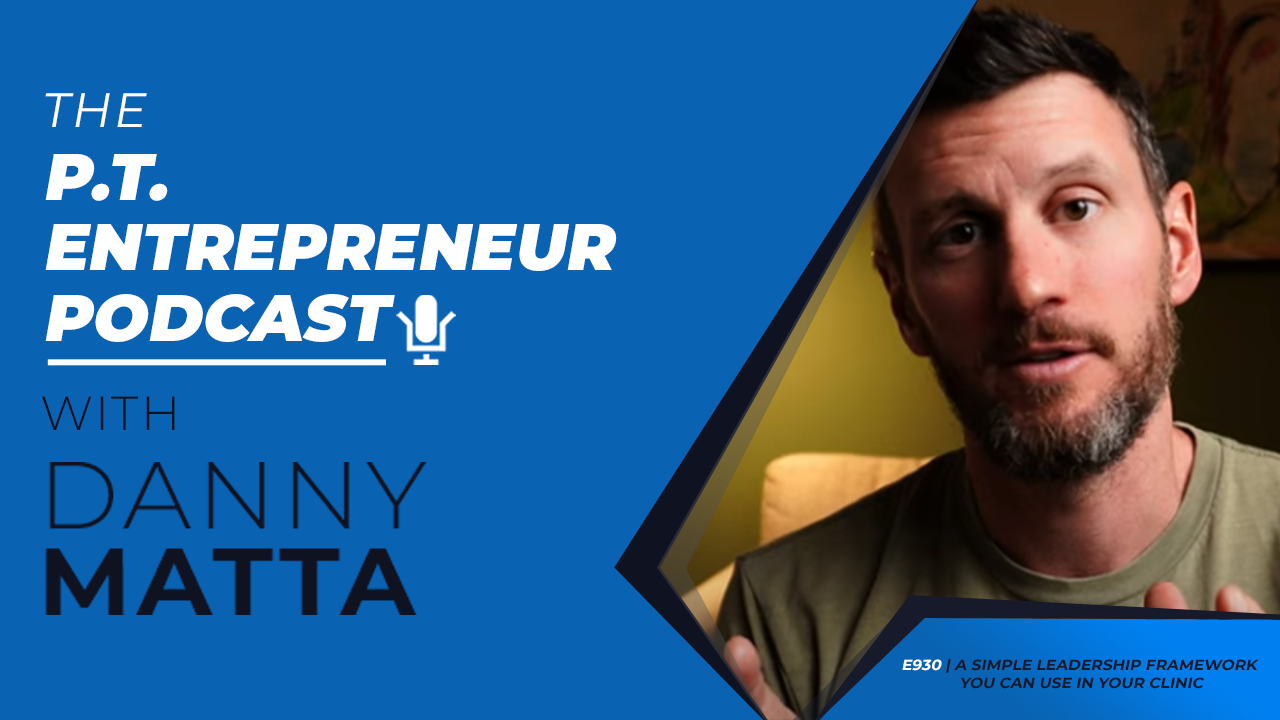
Why Leadership Becomes the Biggest Bottleneck in Your Clinic
Most clinic owners spend years developing clinical expertise.
They learn how to evaluate patients.
Solve complex problems.
Build treatment plans.
Deliver great outcomes.
Then they hire their first employee and realize something surprising:
Running a business requires a completely different skill set.
In this episode, Doc Danny shares lessons from his experience as a military officer, clinic owner, father, and business coach to explain why leadership eventually becomes the biggest bottleneck in every growing practice.
And for many owners, it's not because they're bad people.
It's because nobody ever taught them how to lead.
Clinical Expertise Doesn't Automatically Create Great Leaders
One of the biggest misconceptions in healthcare is that great clinicians naturally become great leaders.
In reality, those are two completely different skill sets.
Being a great clinician requires:
- Technical knowledge
- Problem-solving
- Communication
- Clinical decision-making
Being a great leader requires:
- Emotional intelligence
- Communication adaptability
- Accountability
- Coaching
- Conflict resolution
- Vision
The skills overlap slightly.
But they're not the same.
That's why some of the best clinicians struggle when they begin managing people.
Leadership Starts With Standards
Danny argues that most leadership problems don't actually begin with people.
They begin with unclear expectations.
If your team doesn't know what success looks like, it's impossible for them to achieve it consistently.
Strong leaders create standards around:
- Clinical excellence
- Communication
- Professionalism
- Continuing education
- Patient experience
- Team culture
The goal isn't perfection.
The goal is clarity.
People perform better when they know exactly what's expected of them.
The Coach's Award Matters More Than the MVP Award
One of the most powerful parts of the episode comes from Danny's story about playing basketball with his son.
His son isn't necessarily the most talented athlete.
But he works hard.
Sets goals.
Practices consistently.
And keeps improving.
That's why Danny values the "Coach's Award" mentality.
Not because someone is naturally gifted.
But because they embrace growth.
The same principle applies to employees.
The best team members often aren't the most naturally talented.
They're the ones committed to getting better.
People Need To Know Where They Stand
A surprising number of clinic owners avoid difficult conversations.
They assume silence means everything is fine.
It usually doesn't.
Employees want feedback.
They want to know:
- What they're doing well
- What needs improvement
- What progress they're making
- What the next step looks like
Without feedback, people become uncertain.
Without clarity, motivation drops.
Leadership isn't about criticism.
It's about providing direction.
The Same Communication Style Doesn't Work For Everyone
This is where leadership gets difficult.
Not everyone receives feedback the same way.
Danny explains that some employees prefer direct communication.
Others don't.
Some people thrive on structure.
Others need more discussion and collaboration.
The challenge for leaders is understanding that the way they personally like to communicate isn't necessarily the way others want to be led.
Great leaders adapt.
They don't lower standards.
They simply change how they communicate those standards.
Leadership Is About Wearing Different Hats
One of the best analogies from the episode is the idea of wearing different hats.
The standard remains the same.
The expectations remain the same.
But the approach changes depending on the person.
A leader might need to:
- Coach one employee
- Challenge another
- Encourage a third
- Provide structure for a fourth
The goal isn't treating everyone identically.
The goal is helping everyone succeed.
Turnover Is Often A Leadership Problem
Many owners blame turnover on:
- Generational differences
- Labor shortages
- Compensation
- Market conditions
Sometimes those things matter.
But Danny argues that leadership failures are often the bigger issue.
Employees leave when:
- Expectations are unclear
- Feedback is inconsistent
- Growth opportunities disappear
- Communication breaks down
Replacing employees is expensive.
Not just financially.
But operationally.
It can take months to hire, train, and fully integrate a new clinician into the culture of a practice.
The Best Clinic Directors Aren't Always The Best Clinicians
This is one of the most important lessons for growing practices.
Many owners assume their strongest clinician should become clinic director.
That isn't always true.
The best leaders often aren't the best technicians.
They're the best people developers.
They:
- Build trust
- Understand personalities
- Provide accountability
- Communicate clearly
- Help others improve
Leadership is less about being the smartest person in the room.
And more about helping everyone else perform at a higher level.
Leadership Requires Individualization
Just like patient care.
Every employee is different.
Every person brings:
- Different experiences
- Different communication styles
- Different motivations
- Different fears
- Different goals
A leadership strategy that works perfectly for one employee may completely fail with another.
That's why leadership requires observation.
Listening.
Patience.
And adjustment.
The best leaders individualize their approach without compromising their standards.
The Hard Truth About Leadership
Eventually every business owner encounters the same reality.
If the business stops growing, leadership is often the bottleneck.
Not marketing.
Not sales.
Not operations.
Leadership.
Because every system in the business eventually depends on people.
And people depend on leadership.
That's why leadership isn't just another business skill.
It's the skill that amplifies every other skill.
Key Takeaways
Establish Clear Standards
People can't meet expectations they don't understand.
Provide Consistent Feedback
Employees need clarity on where they stand.
Adapt Your Communication
Different people require different approaches.
Focus On Development
Growth creates engagement.
Build Leaders, Not Just Clinicians
Technical skill alone doesn't create strong managers.
Leadership Drives Retention
Great leadership reduces turnover and strengthens culture.
Technology Spotlight
Want your clinicians spending less time documenting and more time leading patients?
Claire is an AI scribe built specifically for physical therapists and helps reduce documentation time while improving efficiency.
👉 Try Claire free for 7 days
https://www.meetclaire.ai/?utm_source=preroll&utm_medium=podcast&utm_campaign=pt_entrepreneurs
Resources
👉 PT Biz Part-Time to Full-Time Challenge
https://physicaltherapybiz.com/challenge
👉 PT Biz Training YouTube Channel