E935 | 3 Ways To Reduce The Admin Burden In Your Cash-Pay Clinic
Jul 09, 2026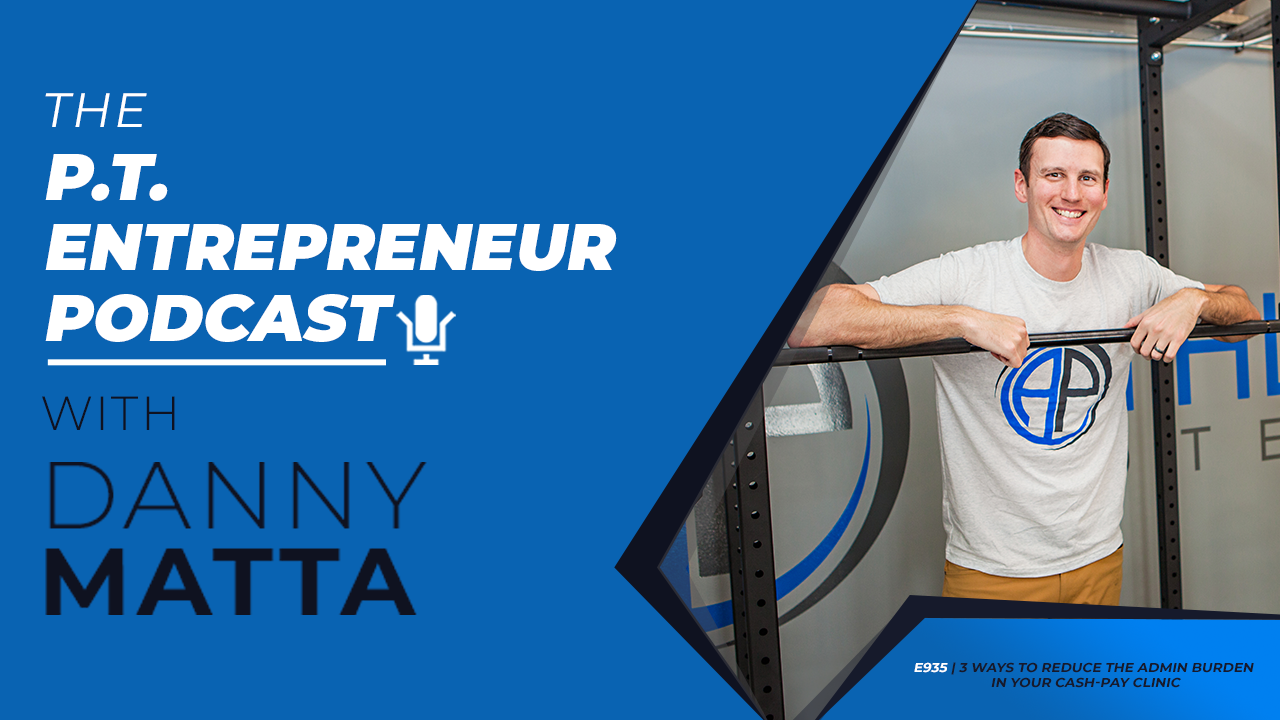
Cut Your Admin Time Without Seeing Fewer Patients
Most clinicians don't have a patient volume problem.
They have an efficiency problem.
This episode breaks down how one clinician was spending just as much time on administrative work as they were treating patients, and why that makes growth almost impossible.
The good news?
The solution isn't working longer hours.
It's building better systems.
The Hidden Cost of Administrative Work
The case study in this episode starts with a clinician who was seeing patients for about 50 hours per month.
Sounds manageable.
Except she was also spending another 50 hours every month on:
- Documentation
- Patient communication
- Treatment planning
- Reviewing labs
- Preparing for visits
- Administrative follow-up
That means only half of her working hours were actually generating revenue.
Even though she was charging approximately $325 per clinical hour, her effective hourly rate was cut nearly in half once all the unpaid administrative work was factored in.
And because of that, she had no desire to see more patients.
Growth Shouldn't Mean Double the Work
The obvious answer might seem simple.
See more patients.
But here's the problem.
If every additional patient creates another hour of administrative work, doubling your schedule simply doubles your stress.
That's not growth.
That's burnout.
Start With a Time Audit
One of the first recommendations Doc Danny makes is performing a time audit.
For one week, write down exactly what you're doing every 15 minutes.
Separate your activities into categories like:
- Patient care
- Administrative work
- Business tasks
- Personal time
- Meals
- Exercise
- Sleep
Most people are surprised where their time actually goes.
You can't improve something you aren't measuring.
Your Workflow May Be the Real Problem
Many clinicians continue doing things simply because it's how they've always done them.
That doesn't make it the best system.
Ask yourself:
- Are you rebuilding the same documents repeatedly?
- Are you manually answering the same questions every week?
- Are you creating every treatment plan from scratch?
- Could templates eliminate repetitive work?
Sometimes taking one step backward to redesign a process allows you to take ten steps forward.
Perfection Is Expensive
Another major bottleneck is perfectionism.
Doc Danny points back to the classic 80/20 Principle.
Twenty percent of your effort often produces eighty percent of your results.
Many clinicians spend enormous amounts of time perfecting documents, emails, and plans that patients barely notice.
Instead, identify the pieces that truly improve outcomes and patient experience.
Everything else should be simplified.
Technology Is a Competitive Advantage
Technology isn't replacing clinicians.
It's removing repetitive work.
One of the biggest opportunities is AI documentation.
Instead of spending visits typing notes, AI scribes can generate documentation while you stay focused on your patient.
That means:
- Better conversations
- Better eye contact
- Better patient experience
- Less documentation after hours
The goal isn't perfection.
It's getting 80 percent of the work done automatically so you can spend your energy where it matters most.
Build Systems Instead of Starting From Scratch
The same principle applies beyond documentation.
Think about your most common patient cases.
Low back pain.
Shoulders.
Knees.
Running injuries.
Instead of recreating every plan of care, build templates that serve as starting points.
Whether it's Google Docs, AI projects, or standardized workflows, reusable systems save hours every month.
Guard Your Time
One of the biggest lessons from this episode has nothing to do with technology.
It has everything to do with boundaries.
Every "quick question" from a patient feels harmless.
But ten minutes here and fifteen minutes there quickly become hours every week.
If something requires clinical decision-making, schedule a follow-up.
Protecting your schedule allows you to provide better care while protecting your own life outside the clinic.
Every unnecessary yes at work is often a no to your family, your health, or your own recovery.
The Goal Isn't Just Productivity
This isn't about squeezing more work into your day.
It's about creating a clinic that can actually grow.
When administrative work becomes more efficient:
- Revenue increases
- Burnout decreases
- Hiring becomes easier
- Patient care improves
- Growth becomes sustainable
The clinicians who build efficient systems don't just make more money.
They enjoy practicing more.
Technology Spotlight
Documentation steals time away from relationship building and patient care.
Claire is an AI scribe trained specifically for physical therapists so clinicians can focus on patients instead of typing notes.
👉 Try Claire free for 7 days
https://www.meetclaire.ai/?utm_source=preroll&utm_medium=podcast&utm_campaign=pt_entrepreneurs
Looking to streamline even more of your practice?
👉 Free AI Admin Training
https://join.thepatchsystem.com/ai-admin-free-training
More PT Biz Training
Want more content on building a scalable cash practice?
👉 PT Biz Training YouTube
https://www.youtube.com/@ptbiztraining
Final Thought
Working longer isn't the answer.
Working smarter is.
When you improve your workflows, embrace the right technology, build repeatable systems, and protect your time, you create a practice that's easier to grow and far more enjoyable to run.
Efficiency isn't about doing more work.
It's about spending more time doing the work that matters most.