
E899 | Starting A Clinic In A Gym CSM Presentation
Mar 10, 2026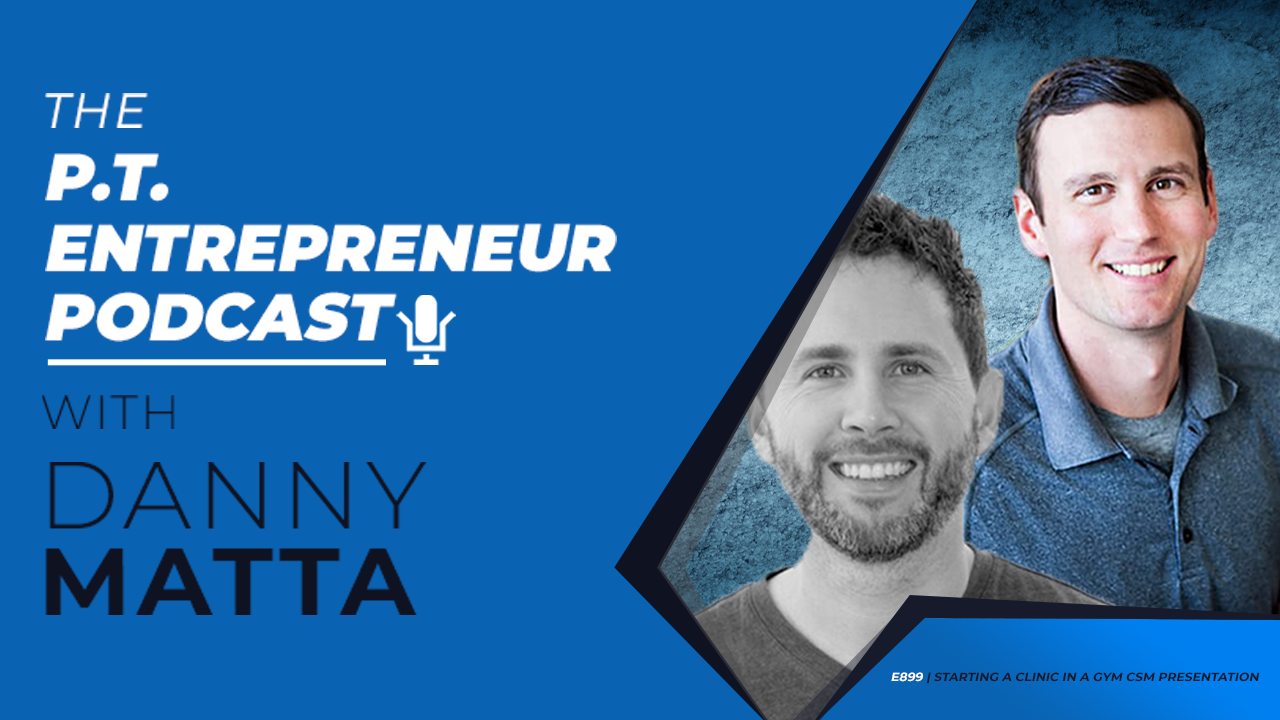
Starting a Cash Clinic in a Gym: The CSM Story Clip With Doc Danny and Yves
This episode is another live CSM clip.
Doc Danny and Yves (Eve) share how they started inside gyms with tiny sublease rooms and how those beginnings turned into seven figure, multi location cash clinics.
The point is simple.
Most successful clinics start small.
The gym model is a legit entry point.
And the path is way more repeatable than people think.
Why the Gym Model Works
In a cash practice, patient experience is everything.
If you are present with the patient while other clinics are stuck on notes and admin, you win on trust, outcomes, and retention.
That is the operational advantage that sets the tone for everything else.
The gym setup adds another edge.
You are already in the room with a community that values performance and movement.
That is a perfect early niche because those people get hurt, care about results, and talk to each other.
Doc Danny’s Start: A Small Office, No Window, and a “Squirrel”
Doc Danny started in Atlanta in 2014 inside a CrossFit gym.
His office had no window.
He had an animal living above the ceiling for months.
He told people it was a squirrel, but he’s pretty sure it was a rat.
The details are funny, but the lesson matters.
You don’t need fancy.
You need reps, relationships, and outcomes.
He grew early through the CrossFit community, then shifted into endurance athletes.
He had military experience and saw tons of running injuries, so runners became a natural lane.
Today that small start turned into a multi location operation with around ten providers and clinics doing revenue he didn’t think was possible at the beginning.
Yves’ Start: He Sold a Practice and Started Over in a Gym With Kids at Home
Yves has been a PT since 2006.
When he started cash, it basically wasn’t a normal path.
He did it out of necessity because insurance based practice felt broken.
He sold his first clinic.
Then started completely over again inside a CrossFit gym.
He had a newborn and a two year old.
It was scary, but it became one of the best decisions he made.
Made to Move grew into multiple clinics and multiple providers in Charleston, then expanded into Charlotte, with plans for more.
He also pointed out a major culture shift.
CSM feels different now.
APTA is finally acknowledging entrepreneurship and performance based care in a bigger way.
The Big Belief Shift: People Now Understand Cash
Years ago, patients thought cash meant literally paying with cash.
Now the conversation is more like:
you’re cash, right
People expect it.
They still show up.
They are more informed consumers because insurance is worse and deductibles are higher.
That creates a level playing field.
If someone is paying out of pocket anyway, they will choose the provider who is niche specific and one on one over a general clinic seeing three people at once.
“Is It Saturated?”
They addressed the saturation question.
The number of true full time cash clinics is still relatively small.
Self employment in PT is still low compared to other professions.
Even if the number of cash clinics doubles, the market is still wide open because most people in pain are not actively seeking PT.
You are not fighting for the small group already searching “physical therapy near me.”
You are hunting.
That means you go out into the community, identify your people, and build relationships where they already spend time.
The Real Marketing Strategy: Be Great, Then Get Seen
Doc Danny gave a simple rule.
There is no secret script.
The secret is being great at what you do.
If you get excellent outcomes and create a great experience, word of mouth becomes your real growth engine.
He used a restaurant example to make the point.
When something is that good, people talk about it and bring others.
That is what you want your clinic to become inside your niche.
But you still have to move.
If you sit in your office and hope people find you, you stay lonely and broke.
You need to hunt your first patients.
Get out, show your face, and build trust in the community.
Yves reinforced this with his own story.
He hated the old insurance clinic marketing playbook.
Dropping off pamphlets at doctor offices and doing lunch visits was miserable.
He grew by doing what he actually enjoyed.
Working out.
Talking to people about health.
Showing up at CrossFit gyms, run clubs, barre classes, and fitness spaces.
That is what built momentum.
The Economics: Why $200 an Hour Is the Target
They closed with basic clinic math.
If you charge too low, overhead eats you alive.
If you charge $200 an hour, you can build a sustainable solo clinic faster and keep a much larger percentage of revenue.
A simple way to think about it.
50 visits per month at $200 is $10,000 revenue
80 visits per month at $200 is $16,000 revenue
For a solo clinic with low overhead, that can replace a salary quickly.
Then you decide which race you want to run.
A lifestyle clinic where you work two days a week and have a waitlist
A mid sized clinic where you still treat but you have a team and enterprise value
A larger clinic group where you step back from care and operate a real business
Every clinic starts as a lifestyle business at first.
Scaling requires business skill.
If you try to jump into a big space and big loans without skill, you can blow yourself up fast.
Technology Spotlight: Claire AI Scribe
In a cash practice, patient experience is everything.
Claire removes documentation so you stay present, follow up better, plan care, and run a tighter operation.
Try it free for 7 days
https://www.meetclaire.ai/?utm_source=preroll&utm_medium=podcast&utm_campaign=pt_entrepreneurs