
E958 | How High Standards Are The Key To Scaling
Sep 29, 2026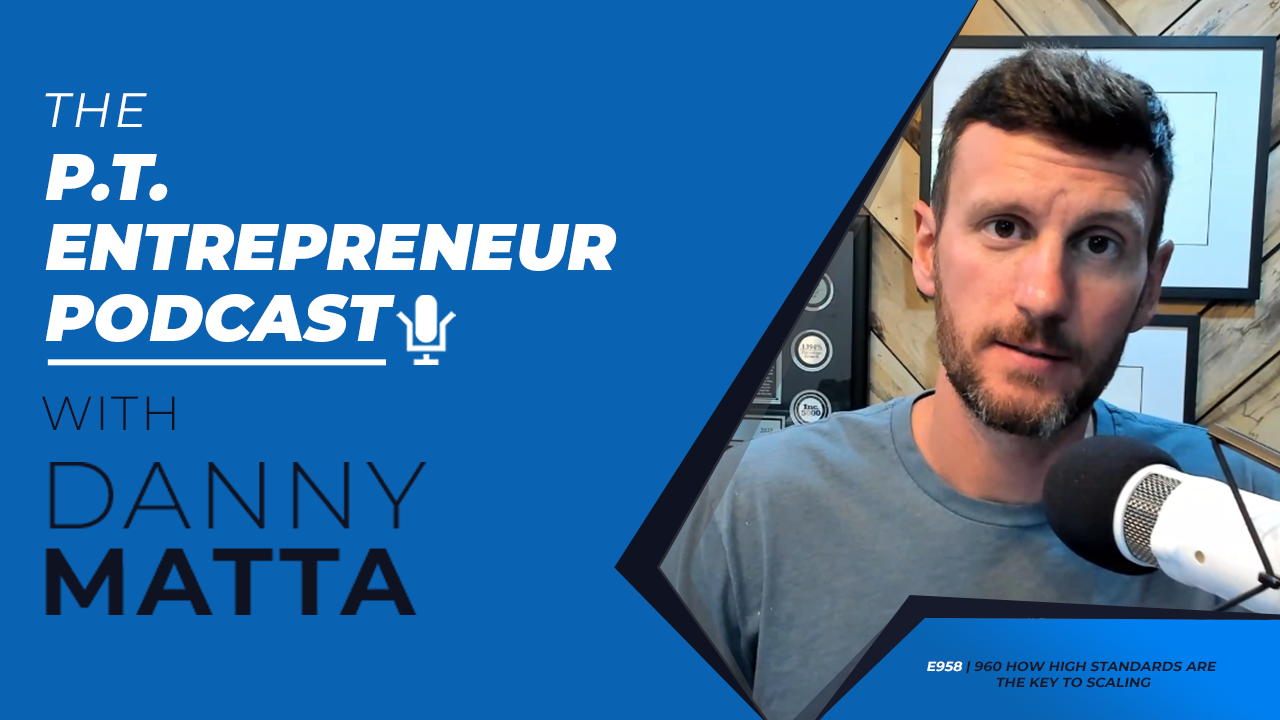
The Standard You Accept Becomes Your Clinic Culture
What can a cash-based physical therapy clinic learn from a restaurant that trains employees for months just to make one dumpling?
A lot more than you might think.
Over the last few episodes, we've looked outside of healthcare at companies with distinctive cultures.
P. Terry's showed how taking care of employees in unusually thoughtful ways can create a place people want to stay.
Spanx showed how creating room for failure can encourage people to experiment, innovate, and take ownership.
The third company in this series is completely different.
Din Tai Fung.
It's an international restaurant brand famous for its soup dumplings, obsessive attention to detail, and an almost ridiculous commitment to consistency.
And that's exactly why clinic owners should pay attention.
Because one of the biggest challenges you'll face as you grow is figuring out how to make sure the standard you created doesn't disappear when someone else starts delivering the service.
It Started With Oil, Not Dumplings
Din Tai Fung didn't begin as an international restaurant company.
The founder started in Taipei selling cooking oil to restaurants.
He would travel around delivering oil to customers.
Then the market changed.
Canned oil became more widely available, and the original business model stopped working.
So the family pivoted.
By the early 1970s, they had moved into food and eventually became known for xiao long bao, the soup dumplings that would define the brand.
Decades later, Din Tai Fung has expanded internationally, including multiple locations across the United States.
That's a pretty dramatic evolution.
Oil delivery to one of the most recognizable dumpling restaurants in the world.
But the most interesting part for clinic owners isn't the pivot.
It's what happened before and during the growth.
Din Tai Fung Became Obsessed With the Product
Danny first experienced Din Tai Fung while visiting friends in Washington State.
His family went to the Seattle location.
They loved it so much they went back.
Then they tried to go a third time.
The restaurant was so packed that they couldn't get in without waiting for hours.
That experience sent Danny down the rabbit hole of learning more about the company.
What stood out wasn't some brilliant marketing funnel.
It was the operational obsession behind the product.
Their Dumplings Have a Standard
Din Tai Fung is famous for soup dumplings.
Making them correctly is not simple.
The filling contains meat and a broth mixture that becomes liquid when the dumpling is steamed.
The wrapper has to hold everything together.
And the finished dumpling has to meet the company's specifications.
One of those standards is especially memorable.
Eighteen folds.
The dumplings aren't supposed to come out with 13 folds because someone was busy.
Or 16 because the restaurant had a long wait.
The standard is 18.
That's the product.
Employees Can Train for Months to Make Them
This is where the story gets even more interesting.
According to Danny's discussion of the company's training process, employees can spend roughly three to six months learning how to properly make the dumplings.
Some higher-level roles may require even longer development.
Think about that.
Months of training.
To make one part of the restaurant's menu correctly.
And meanwhile, most clinic owners are hoping their new PT is fully operational by the end of week two.
That's a pretty significant contrast.
What's Your Version of the 18-Fold Dumpling?
You don't need to start counting folds in your clinic.
But you should know what your equivalent is.
What are the things that absolutely define the patient experience?
How quickly does someone respond to a new lead?
What happens before an evaluation?
How is the evaluation conducted?
How do clinicians communicate the plan of care?
How do you follow up when somebody doesn't schedule?
How do patients experience the clinic when they walk through the door?
How do clinicians communicate between visits?
What happens when someone completes their plan of care?
Those things become your standards.
And if they're important enough to define, they're important enough to train.
Most Clinics Don't Have a Hiring Problem First
Sometimes they have a training problem.
The owner hires someone talented.
They give them a quick orientation.
Show them the EMR.
Explain a few clinic processes.
Hand over some patients.
Then six weeks later, the owner is frustrated.
The clinician isn't doing things the way the owner would.
The sales conversation is different.
The patient experience feels inconsistent.
Follow-up isn't happening.
Packages aren't being discussed correctly.
Documentation is handled differently.
The owner thinks:
Why don't they get it?
But there's another question worth asking:
Did you actually teach them?
Hiring Someone Doesn't Transfer What's in Your Head
This becomes one of the biggest challenges when a cash practice starts growing.
The founder has accumulated years of invisible knowledge.
You know how you want an evaluation to feel.
You know what questions you ask.
You know when to push.
You know when to listen.
You know how you explain pricing.
You know how you talk about the plan of care.
You know the little things that make your patients feel taken care of.
But the new employee wasn't there for the hundreds or thousands of repetitions that taught you those things.
They can't download your experience.
You have to transfer it.
Training Is How You Protect the Standard
This is why onboarding shouldn't simply be an administrative process.
Fill out your paperwork.
Here's your login.
Here's where we keep the bands.
Here's the bathroom.
Good luck.
Onboarding is your opportunity to teach someone what good looks like inside your company.
Not generally.
Specifically.
What does a great evaluation look like here?
What does excellent communication look like here?
How do we handle a patient who is hesitant about continuing?
How quickly do we respond to leads?
What do we do when someone cancels?
How do we communicate with referring providers?
How do we talk about continuity after discharge?
The more important something is to your patient experience, the less you should leave it to interpretation.
The Temptation Is to Rush This
Clinic owners rarely rush onboarding because they don't care.
They rush because they're exhausted.
You're treating 30 patients.
Trying to manage marketing.
Following up with leads.
Handling payroll.
Answering employee questions.
Fixing problems.
Working nights.
Then you finally hire someone.
You look at their empty schedule and think:
Please just take some of these patients.
That's understandable.
It's also where standards can start slipping.
Don't Hire Someone Just to Solve Your Immediate Pain
The immediate goal may be getting patients off your schedule.
The larger goal is building a clinic where patients receive an excellent experience regardless of which clinician they see.
Those aren't always the same thing.
If you rush someone into patient care before they're prepared to deliver your standard, you've solved one short-term problem while potentially creating a bigger long-term one.
Your schedule gets lighter.
But the patient experience becomes inconsistent.
Now you're managing complaints.
Fixing communication issues.
Retraining.
Worrying about whether patients are getting what they were promised.
That's not leverage.
That's moving the problem.
Your Reputation Eventually Belongs to the Team
When you're solo, your reputation is relatively simple.
Patients are hiring you.
They experience you.
They refer people to you.
As soon as you hire another clinician, something changes.
Now they're experiencing the company.
A patient may have heard you on a podcast.
Seen your Instagram.
Attended your workshop.
Received a referral specifically because someone loved working with you.
Then they schedule with another clinician.
Whatever happens next affects your reputation.
The patient doesn't care that you're not the one who delivered the experience.
Your name is on the business.
This Is Why Scaling Requires Repeatability
You don't scale excellence simply by hiring more talented people.
You need to understand what creates the excellent result.
Then you need to make as much of that process repeatable as possible.
That doesn't mean turning clinicians into robots.
Clinical judgment still matters.
Individual personalities matter.
Different patients need different things.
But the underlying standards should be clear.
Din Tai Fung doesn't need every employee to have the same personality.
They do need the dumpling to meet the standard.
Your clinic needs the same distinction.
Standardize the Important Things
The goal isn't creating a 400-page operations manual nobody reads.
Start with what actually matters.
Patient experience.
Clinical quality.
Communication.
Lead follow-up.
Evaluation process.
Plan-of-care recommendations.
Scheduling.
Documentation.
Billing.
Continuity.
Whatever most directly affects outcomes, patient trust, revenue, and reputation deserves clarity.
Then train it.
Observe it.
Give feedback on it.
Improve it.
The Standard Has to Be Observable
"Provide great care" isn't a useful operational standard.
Neither is:
"Give patients an amazing experience."
Everyone agrees with those statements.
But what do they mean?
A useful standard is something people can understand and execute.
Maybe every new lead receives a response within a defined period during business hours.
Maybe every evaluation includes specific education around the plan of care.
Maybe every clinician follows a defined process before a patient finishes treatment.
Maybe every new employee shadows a certain number of evaluations before carrying their own caseload.
The exact standards are yours.
The important part is making them clear enough that the team knows whether they're meeting them.
Your Standards Are Up to You
This is where culture becomes personal.
There isn't one correct cash PT clinic.
Some owners care deeply about a specific clinical methodology.
Others care about communication.
Others care about punctuality.
Others care about patient education.
Others care about community involvement.
Some may care about all of those things.
The point isn't that your standards need to look exactly like somebody else's.
The point is that you need to decide what they are.
Because if you don't intentionally define the standard, one will still develop.
It just may not be the one you wanted.
What You Allow Becomes the Standard
This is one of the harder parts of leadership.
You can write down whatever you want.
You can put values on the wall.
You can create an employee handbook.
But the actual standard is what repeatedly happens without being corrected.
If you say leads should be followed up with quickly but regularly allow them to sit untouched, you've created a different standard.
If you say documentation needs to be completed on time but consistently ignore late notes, that's the real standard.
If you say the patient experience matters but tolerate mediocre communication, employees notice.
The culture learns from what leadership allows.
Din Tai Fung Built the Roots Before It Built the Empire
There's another part of the company's story that's worth paying attention to.
Din Tai Fung didn't immediately become a massive international brand.
It spent years developing the product.
One location.
Processes.
Training.
Standards.
Repetition.
Only later did the company expand aggressively.
Danny compares this to bamboo.
For a long time, the visible growth can look unimpressive.
But underneath the surface, the plant is developing the root system required to support what comes later.
Businesses work similarly.
Your First Clinic Is Where You Build the Roots
Owners can become impatient here.
You see someone opening location three.
Someone else has eight clinicians.
Another clinic is adding a second market.
You start wondering whether you're moving too slowly.
Maybe.
But before expanding, there are foundational questions worth answering.
Does your current location consistently deliver the experience you want?
Can another clinician produce strong results without you constantly intervening?
Does your team know what good looks like?
Is your onboarding process documented?
Are your sales processes repeatable?
Can leads be handled without you?
Does the clinic operate well when you're away?
If not, another location may simply duplicate the problems.
Scaling Chaos Gives You More Chaos
Opening another clinic doesn't fix weak systems.
Hiring another clinician doesn't fix poor onboarding.
Adding more leads doesn't fix weak sales.
Increasing revenue doesn't automatically fix bad operations.
Growth amplifies what's already there.
That's why the slower foundational work matters.
The owner who spends time tightening systems may look like they're growing more slowly.
Then something changes.
The processes work.
The team knows the standards.
New hires ramp faster.
Leadership exists.
Marketing works.
The business can reproduce what it already knows how to do.
That's when growth can accelerate without everything breaking.
Build Something Repeatable Before You Repeat It
This sounds obvious.
It's surprisingly easy to ignore.
If you're thinking about opening location two, ask whether location one is actually reproducible.
What would you need to teach a new clinic director?
What would the first 30 days look like?
What happens during onboarding?
How are patients handled?
How are leads handled?
How do you know whether the location is performing well?
What gets measured?
Who owns quality control?
If the answers mostly live inside your head, you don't have a repeatable model yet.
You have a successful location that depends heavily on you.
Those are different things.
Slow Growth Can Create Faster Growth Later
This is where patience becomes strategic.
A clinic owner may spend months developing onboarding.
Creating SOPs.
Improving the evaluation process.
Building dashboards.
Training a clinical director.
Cleaning up CRM workflows.
Standardizing communication.
None of that looks particularly exciting on Instagram.
But those systems become infrastructure.
Once the infrastructure exists, every future hire doesn't require rebuilding the company from scratch.
That's how the early work starts compounding.
The Goal Is Sustainable Growth
Fast growth isn't impressive if you have to unwind it later.
You don't want to add five clinicians and lose three because the onboarding was terrible.
You don't want a second location that constantly needs the owner to drive across town and solve problems.
You don't want revenue growth paired with collapsing patient experience.
You don't want the team expanding faster than your leaders can support it.
Growth that lasts requires structure underneath it.
That's the lesson from companies that spend years getting exceptionally good at one thing before trying to replicate it everywhere.
Your Clinic Needs Its Own Version of Quality Control
Din Tai Fung doesn't simply teach the standard and assume it will remain perfect forever.
Standards have to be maintained.
Your clinic is no different.
Training isn't something that happens during someone's first week and then disappears.
You need ways to know whether the patient experience still matches what you intended.
That could mean reviewing calls.
Looking at conversion metrics.
Auditing documentation.
Discussing cases.
Reviewing patient feedback.
Observing evaluations.
Tracking plan completion.
Looking at retention.
Coaching clinicians.
The exact mechanism will depend on the standard you're trying to protect.
Clinic Directors Can Become Guardians of the Standard
Eventually, the owner shouldn't personally quality-check everything.
That's another bottleneck.
As the company grows, other leaders need to understand the standard well enough to protect it.
That's part of the value of a strong clinic director.
They're not simply the person who answers questions when the owner is unavailable.
They help maintain the way the clinic operates.
They coach people.
Identify drift.
Reinforce expectations.
Solve problems.
Develop clinicians.
That allows the standard to survive beyond the founder.
High Standards Attract People With High Standards
Culture becomes easier to maintain when you hire people who naturally care about the same things.
A clinician who takes enormous pride in their clinical skill is more likely to appreciate an organization that cares about development.
Someone who values communication will notice when the clinic takes communication seriously.
Someone who wants to improve will respond differently to coaching than someone simply looking to get through the day.
This is why hiring and culture are inseparable.
You're not simply hiring a license.
You're bringing another person into the environment that defines your reputation.
"Good Enough" Can Become Expensive
One of the hardest situations is the employee who isn't terrible.
They're okay.
Patients aren't furious.
They're not creating catastrophic problems.
But they're consistently below the standard of the rest of the team.
That's difficult because replacing someone takes work.
Hiring takes time.
Training takes time.
The owner is tired.
So it's easy to tolerate it.
But on a high-performing team, consistently tolerating "okay" sends a message.
It tells everyone else what the real standard is.
Your Best Employees Notice What You Tolerate
High performers usually know who is carrying their weight.
They know who follows through.
They know who cares.
They know who doesn't.
If leadership continually ignores someone operating below the team's standard, the strongest employees may become frustrated.
Why should they put in extra effort if it doesn't matter?
Why maintain the standard if nobody else has to?
That's how one personnel problem can become a culture problem.
Accountability isn't simply about correcting one employee.
It's also about protecting the people who are already doing great work.
The Little Details Matter
Danny connects this idea to lessons from the military.
Small standards can look insignificant.
Why does this tiny detail matter?
Why do we care exactly how something is done?
Because attention to detail becomes a habit.
The little things accumulate.
A missed follow-up here.
A sloppy handoff there.
A late note.
An unanswered message.
An inconsistent evaluation.
None of those may destroy the clinic individually.
But together they create a different patient experience.
Excellence Usually Looks Boring Up Close
The impressive outcome gets attention.
The packed restaurant.
The thriving clinic.
The second location.
The seven-figure business.
The owner who no longer treats.
But underneath those outcomes are usually a lot of boring repetitions.
Train the process.
Review it.
Correct it.
Do it again.
Document it.
Improve it.
Teach somebody else.
Check it again.
That's how consistency gets built.
Being Remarkable Requires Being Worth Remarking About
Danny makes an important point about Din Tai Fung.
He tells people about it.
He goes out of his way to eat there.
He's visited multiple locations.
When he was in Anaheim for CSM, he went three times.
The company isn't paying him.
He isn't part of their marketing team.
He's simply had an experience good enough that he talks about it.
That's what every clinic owner should want.
Your Best Marketing Starts With the Product
You can become great at Meta ads.
Google Ads.
Email.
SEO.
Workshops.
Social media.
Referral relationships.
All of those things can accelerate growth.
But marketing can only amplify what happens after someone becomes a patient.
If the experience is mediocre, great marketing gets more people into a mediocre experience.
If the experience is exceptional, marketing accelerates something that already generates referrals and repeat business.
That's a very different growth engine.
A Great Patient Experience Extends Your Marketing Budget
Think about two clinics.
Clinic A is brilliant at acquiring leads but delivers an average experience.
They constantly need new people.
Clinic B isn't nearly as sophisticated at marketing, but patients love the experience.
They finish their plans.
They come back when they need help.
They tell spouses.
They refer friends.
They bring family members.
They leave great reviews.
Clinic B has something Clinic A can't easily buy.
Compounding trust.
Now imagine combining that patient experience with intentional marketing.
That's where things become powerful.
This Is How a Clinic Becomes a Compounding Clinic
The Compounding Clinic isn't built simply by spending more money on acquisition.
It grows because the value created today continues producing returns later.
A patient becomes a repeat patient.
A repeat patient becomes a referral source.
A clinician becomes a leader.
A documented process trains the next employee.
A strong culture attracts another great hire.
A great patient experience produces another review.
A relationship produces another community partnership.
The work begins building on itself.
But that only happens when the underlying standard is worth multiplying.
Before You Scale, Ask What You're Scaling
More isn't always better.
More of something excellent can be powerful.
More of something inconsistent can be dangerous.
Before you hire the next clinician, open the next location, or dramatically increase your marketing spend, ask:
What exactly are we multiplying?
If you like the answer, build the infrastructure to reproduce it.
If you don't, fix the standard first.
Because once growth starts accelerating, whatever is already inside the business becomes harder to control.
Your 18 Folds Are Up to You
Din Tai Fung decided what mattered to them.
They decided what their product should look like.
They decided how people would be trained.
They decided what was acceptable.
Your clinic gets to make those decisions too.
Maybe your standard isn't 18 folds.
Maybe it's the way every patient is greeted.
The depth of your evaluations.
The clinical expertise of your providers.
The speed of your communication.
The way your team follows through.
The way people are treated when something goes wrong.
The exact standards will be unique to your business.
But they shouldn't be accidental.
Because eventually, those standards become your reputation.
And your reputation becomes one of the most valuable assets your clinic can build.
Standards Become More Important as You Remove Yourself
There's an interesting progression that happens as a clinic grows.
Early on, the owner is the quality-control system.
You answer the leads.
You perform the evaluations.
You treat the patients.
You have the difficult conversations.
You notice when something feels off.
That's manageable when everything flows through you.
But the entire point of building a team is eventually getting things to stop flowing through you.
That's when standards become even more important.
The Business Has to Know What Good Looks Like Without You
Imagine you're gone for two weeks.
A new lead comes in.
Someone evaluates them.
A patient has a concern.
A clinician needs help.
A schedule opens up.
Someone finishes their plan of care.
How many of those situations require the team to wait for you?
That's a useful test.
If the business can only maintain its quality while you're physically present, you haven't really transferred the standard yet.
You've transferred tasks.
The next level is transferring judgment.
Don't Just Teach People What to Do
Teach them why.
This is where SOPs alone can fall short.
A checklist can tell someone what steps to follow.
But eventually, something happens that isn't on the checklist.
That's when understanding the reason behind the process matters.
Why do we respond to leads quickly?
Why do we spend so much time on the evaluation?
Why do we recommend a complete plan of care instead of letting patients randomly schedule one visit at a time?
Why do we follow up after discharge?
Why do we care so much about the handoff between clinicians?
When employees understand the outcome you're trying to create, they can make better decisions when the exact situation isn't documented.
The Best Systems Create Consistency Without Killing Judgment
Physical therapy isn't a dumpling.
You can't standardize every patient interaction down to 18 folds.
Nor should you.
Patients are different.
Clinicians need judgment.
Treatment should change based on the person in front of you.
But the surrounding experience can still be remarkably consistent.
The patient should understand the plan.
Communication should be clear.
Follow-up should happen.
The clinician should know the expectations.
The business should deliver what it promises.
You can create consistency around the patient without removing the clinician's ability to think.
Clinical Autonomy and High Standards Can Coexist
Sometimes owners hear "standardization" and immediately picture a corporate clinic where every provider is forced into the same treatment protocol.
That's not the goal.
A cash practice should be able to preserve clinical autonomy while maintaining standards around the things that define the business.
Your clinicians may choose different exercises.
They may communicate differently.
They may develop different specialties.
They may have their own personalities.
Great.
But if your clinic promises high-level one-on-one care, that standard shouldn't change depending on which provider is working Tuesday afternoon.
Your Hiring Process Is Part of Quality Control
The easiest person to train into your standard is someone who already values similar things.
That's why protecting quality starts before onboarding.
What are you looking for?
Clinical curiosity?
Ownership?
Communication?
Coachability?
Attention to detail?
Someone who wants feedback?
Someone who takes pride in improving their craft?
Those qualities matter because you can teach a process much more easily than you can force someone to care about a process they fundamentally don't value.
Hire for the Culture You're Trying to Protect
If your clinic has high standards, tell candidates.
Don't hide the expectations because you're afraid they'll say no.
The right person may actually be attracted to them.
Explain what onboarding looks like.
Explain how feedback works.
Explain what you expect clinically.
Explain how your team communicates.
Explain how you measure performance.
Explain what matters to you.
You're not trying to convince every PT to work for you.
You're trying to find people who want to work in the environment you're building.
High Standards Shouldn't Mean Constant Fear
This connects nicely with the previous episode about Spanx.
A company can have extremely high standards while still allowing people to fail.
Those ideas aren't contradictory.
You can expect excellence and still understand that someone learning a new skill will make mistakes.
You can allow experimentation while protecting non-negotiables.
You can give autonomy while maintaining accountability.
The question is whether the person is learning, improving, and consistently working toward the standard.
Failure and Low Standards Aren't the Same Thing
Someone trying a thoughtful new community event that doesn't generate patients isn't necessarily failing the standard.
They ran an experiment.
Now you learn from it.
A clinician repeatedly ignoring a clearly defined patient follow-up process after coaching is different.
That's not experimentation.
That's a performance issue.
Healthy cultures understand the difference.
If everything has to work perfectly the first time, people stop innovating.
If nothing has consequences, standards disappear.
Strong leadership sits between those extremes.
This Is Where the Three Culture Examples Connect
That's what makes this business case-study series useful.
P. Terry's, Spanx, and Din Tai Fung aren't remotely similar companies.
One sells burgers.
One built an undergarment brand.
One is famous for dumplings.
Their cultures don't look identical either.
They shouldn't.
P. Terry's provides examples of taking care of employees as people.
Spanx provides an example of making experimentation and failure part of innovation.
Din Tai Fung provides an example of obsessive standards, training, and consistency.
Different businesses.
Different priorities.
Different expressions of culture.
But none of those cultures happened by accident.
Your Clinic Doesn't Need to Copy Any of Them
That's the bigger lesson.
You don't need birthday cakes because P. Terry's does birthday cakes.
You don't need to ask employees what they failed at this week because Sara Blakely grew up hearing that question.
You don't need six months of onboarding because Din Tai Fung can spend months training dumpling makers.
Those examples should make you think.
What matters to you?
What do you want employees to experience?
What do you want patients to experience?
What behaviors do you want encouraged?
What standards are non-negotiable?
What are you willing to tolerate?
What are you unwilling to tolerate?
Those answers become the raw material for your culture.
Culture Is an Extension of the Owner
This is one of the opportunities of owning an independent practice.
You get to decide.
If continuing education is incredibly important to you, build that into the company.
If family time matters, build schedules around it.
If you want clinicians experimenting with workshops and community partnerships, give them room.
If clinical excellence is a major value, invest heavily in development.
If communication is critical, make the expectations incredibly clear.
Your clinic doesn't have to feel like every other physical therapy company.
It can reflect what you genuinely care about.
But You Have to Be Intentional
Culture forms whether you design it or not.
The question is whether you're shaping it.
If you're intentional, you can decide what gets reinforced.
If you're not, culture develops from whatever happens repeatedly.
The loudest employee may define communication.
The busiest clinician may define documentation expectations.
The owner's stress may define how mistakes are handled.
Convenience may define the hiring standard.
Whatever is easiest can slowly become normal.
That's why culture deserves actual thought.
Write Down What's Non-Negotiable
A practical exercise is to make this simpler.
Take out a piece of paper.
Ask:
What are five things I never want compromised as this clinic grows?
Don't start with generic values.
Start with the experience.
Maybe it's:
Patients never feel rushed.
We do what we say we're going to do.
Clinicians continue developing their skills.
We respond quickly when someone needs help.
We don't tolerate people treating teammates poorly.
Your answers may be completely different.
Good.
They're supposed to be.
Then Ask Whether Your Systems Support Those Standards
This is where values become operational.
If continuing education matters, how do you support it?
If fast communication matters, who owns incoming messages?
If patients never feeling rushed matters, what does that mean for scheduling?
If ownership matters, how much authority do employees actually have?
If family time matters, what behaviors from leadership reinforce that?
Every stated value creates operational consequences.
Otherwise, it's just language.
Your Calendar Usually Reveals Your Real Priorities
You can say staff development matters.
But if nobody ever has time to train, it probably doesn't matter operationally.
You can say patient experience matters.
But if providers are consistently overloaded, you're making a different choice.
You can say culture matters.
But if every team meeting gets canceled because the owner is treating, you're communicating something.
Look at where time goes.
Look at where money goes.
Look at what gets discussed.
Those are usually better indicators of the actual culture than what's written on the website.
Training Should Continue After Onboarding
One mistake is treating training like something employees graduate from.
Three weeks of onboarding.
Done.
Now go work.
But if the standard matters, development should continue.
Great clinicians continue learning.
Great salespeople review conversations.
Great leaders get coaching.
Great companies refine processes.
Your clinic should do the same.
The exact cadence can vary.
The important part is that improvement doesn't stop once someone has a full schedule.
Give Feedback Before Small Problems Become Standards
This is another place owners sometimes wait too long.
Something bothers you.
A clinician handles a situation differently than expected.
An admin's communication isn't quite right.
A process isn't being followed consistently.
But it feels small.
You don't want to micromanage.
So you wait.
Then it happens again.
And again.
Eventually, everyone assumes it's acceptable.
Early feedback is usually easier than late correction.
Clear Feedback Is Kinder Than Silent Frustration
Your employee can't fix an expectation they don't know they're missing.
If something matters, explain it.
Show them what good looks like.
Explain why it matters.
Give them an opportunity to improve.
That's much better than silently getting frustrated for six months and eventually telling someone they've been doing something wrong the entire time.
Standards require communication.
Make the Standard Easier to Follow
Good systems don't simply tell people what to do.
They make doing the right thing easier.
If leads need quick follow-up, create clear CRM workflows.
If every evaluation needs certain information, build it into the process.
If patient handoffs matter, create a consistent handoff method.
If continuity matters, make sure clinicians know when and how that conversation should happen.
If documentation timeliness matters, remove unnecessary friction where possible.
The system should support the behavior.
Technology Should Protect the Standard, Not Complicate It
Technology can help here.
Automations can prevent leads from disappearing.
Templates can improve consistency.
Dashboards can make performance visible.
Communication tools can simplify handoffs.
AI can reduce administrative work.
But technology isn't the standard.
It's infrastructure supporting the standard.
A bad process automated is still a bad process.
Define the experience first.
Then use technology to make delivering it easier.
Measure the Things That Tell You Whether the Standard Is Working
Not every standard needs a KPI.
Some things require observation and judgment.
But there are plenty of areas where numbers help.
Lead response.
Discovery call conversion.
Evaluation conversion.
Plan completion.
Patient retention.
Utilization.
Continuity.
Reviews.
Referrals.
If something is important to the health of the clinic, you should have some way of knowing whether it's improving or slipping.
Numbers Can Reveal Drift Before You Feel It
This becomes increasingly useful as you step away from day-to-day care.
Maybe plan completion starts falling.
Maybe evaluations are converting differently between providers.
Maybe one clinician generates significantly more referrals.
Maybe cancellations increase.
The numbers don't automatically tell you why.
But they tell you where to look.
Then leadership can investigate.
That's far more scalable than the owner relying entirely on instinct.
Standards Create a Better Employee Experience Too
Clear standards aren't only for patients.
Good employees generally want to know what success looks like.
Ambiguity is exhausting.
Am I doing this right?
Is this what the owner wants?
Why did I get corrected for something nobody explained?
What am I supposed to prioritize?
A strong onboarding and training process answers those questions.
People know what's expected.
They know where they stand.
They know how to improve.
That can actually create more freedom, not less.
Structure Can Create Autonomy
This sounds contradictory until you've experienced it.
When someone understands the boundaries, they can operate more independently inside them.
Think about a clinician who knows:
These are our patient-care standards.
These are our communication expectations.
These are our financial guardrails.
These are the outcomes I'm responsible for.
Within those boundaries, they can make decisions.
Now the owner doesn't have to approve everything.
Clarity creates room for autonomy.
This Is How You Develop Future Leaders
Your future clinic director probably won't become a strong leader because you suddenly hand them the title.
They develop by learning the standard.
Then maintaining it personally.
Then helping other people maintain it.
Then coaching others.
Then solving problems without you.
Eventually, they're not simply following the culture.
They're helping protect it.
That's when the company becomes far less dependent on the founder.
Your Standards Should Survive Growth
This is the real test.
Can the patient who sees clinician number six receive an experience you're proud of?
Can location number two maintain what made location number one special?
Can a new admin communicate the way you expect?
Can a clinic director onboard somebody without you?
Can the business add volume without lowering quality?
Growth is easy to celebrate.
Maintaining quality while growing is much harder.
That's What Makes Din Tai Fung So Interesting
The impressive part isn't simply that they can make an incredible dumpling.
A small family restaurant can make an incredible dumpling.
The impressive part is reproducing that experience across a growing organization.
Different employees.
Different managers.
Different cities.
Different countries.
And still maintaining recognizable standards.
That's what turns craftsmanship into a scalable company.
Your clinic faces a version of the same challenge.
Your Service Has to Be Worth Talking About
This is also why quality is inseparable from marketing.
Danny didn't discover Din Tai Fung because he analyzed its advertising strategy.
He experienced the restaurant.
Then he told people about it.
Then he went back.
Then he visited other locations.
Then he talked about the company on a physical therapy business podcast.
That's what a remarkable experience does.
It travels.
Word of Mouth Is Earned
Clinic owners love referrals because they're inexpensive and usually high quality.
But referrals aren't a marketing tactic you simply turn on.
They're an outcome.
Patients refer when the experience gives them a reason to.
The clinical result matters.
The relationship matters.
Communication matters.
Convenience matters.
The details matter.
The stronger the total experience, the easier it becomes for somebody to confidently tell a friend:
You need to go there.
Super Brand Ambassadors Are Created Through Experience
This connects directly with the PT Biz concept of Super Brand Ambassadors.
These are the patients, community partners, employees, and supporters who actively talk about your clinic.
They don't need to be reminded every week to refer someone.
They believe in what you do.
But that advocacy has to come from somewhere.
Usually, it starts with an experience worth sharing.
The standard creates the experience.
The experience creates trust.
Trust creates advocacy.
Advocacy creates more opportunities.
That's another way culture compounds.
Marketing Can't Permanently Outrun a Weak Service
You can spend more.
Create better ads.
Hire an agency.
Build a beautiful website.
Post every day.
But if the patient experience underneath the marketing is inconsistent, eventually that catches up with you.
People don't complete care.
They don't come back.
They don't refer.
Reviews aren't as strong.
Your acquisition costs have to work harder because fewer patients compound into future business.
That's an expensive way to grow.
Great Service Makes Every Marketing Channel Better
Now reverse it.
Patients get great results.
Communication is excellent.
The clinic runs on time.
The team is engaged.
People understand their plan.
They know what happens after discharge.
They trust the clinicians.
Now layer marketing on top.
Your ads bring someone into an experience they're likely to talk about.
Your workshop attendees become patients who refer others.
Your community partners hear positive feedback.
Your reviews reinforce your digital marketing.
Your existing patient base becomes an acquisition channel.
The service makes the marketing more valuable.
The Best Businesses Usually Get Both Right
Danny's point isn't that marketing doesn't matter.
It absolutely does.
The strongest combination is a remarkable service with intentional marketing.
The service gives you retention, referrals, repeat business, reputation, and trust.
Marketing gives that service more opportunities to reach the right people.
Together, those create a much stronger trajectory than either one alone.
This Is the Work Before the Growth
If you're currently at one location with one or two clinicians, don't underestimate this stage.
This is where you can build the roots.
Define the patient experience.
Document the processes.
Improve onboarding.
Develop the team.
Fix the weak spots.
Clarify the standards.
Build your scorecard.
Figure out what makes your clinic worth choosing.
You may feel like you should be moving faster.
But this work makes future speed possible.
Don't Build Location Two to Escape Problems in Location One
If your current clinic depends entirely on you, adding another location won't create freedom.
If your onboarding is weak, more hiring won't solve it.
If your culture is unclear, a larger team won't clarify it.
If patient experience is inconsistent, more marketing won't fix it.
Solve the important problems where you are.
Then replicate the solution.
That's much easier than trying to repair the foundation after you've already multiplied it.
Build the Roots Deep Enough to Support the Next Stage
The bamboo analogy is useful because visible growth isn't the only growth that matters.
A stronger onboarding process is growth.
A clinician who can lead without you is growth.
A documented evaluation process is growth.
A better CRM workflow is growth.
A consistent patient experience is growth.
A team that understands your standards is growth.
Those things may not immediately show up as another $20,000 in monthly revenue.
But they're building the infrastructure that can support it later.
Decide What You're Unwilling to Compromise
This is where the culture series ultimately lands.
What matters enough that you're willing to protect it even when protecting it is inconvenient?
Because that's when standards get tested.
When you're tired.
When you're short staffed.
When you desperately need another clinician.
When someone is producing revenue but hurting the culture.
When the schedule is packed.
When fixing the issue requires an uncomfortable conversation.
It's easy to have standards when they're convenient.
Culture becomes visible when maintaining them costs you something.
The Owner Sets the Ceiling
Your team is watching what you do.
If you obsess over quality, they'll notice.
If you accept shortcuts, they'll notice that too.
If you coach people, reinforce expectations, and continue improving systems, that becomes normal.
If you constantly make exceptions because you're tired, that becomes normal.
The standard starts with leadership.
And over time, the goal is for the team to begin protecting it alongside you.
Build a Clinic Worth Remarking About
You don't need to become Din Tai Fung.
You don't need employees training for six months before seeing a patient.
You don't need to copy the culture of Spanx or P. Terry's.
But you should be able to explain what makes your clinic different.
What do you care about more than the average practice?
What experience are you trying to create?
What do you train harder than everyone else?
What do you refuse to compromise?
What would make a patient tell five other people about you?
Those questions are worth answering.
Because being remarkable starts with building something worthy of remark.
Technology Spotlight
Documentation continues to be one of the biggest frustrations for physical therapists.
And if you're trying to maintain a high clinical standard as your practice grows, you don't want your clinicians spending unnecessary time buried in paperwork.
Claire is an AI scribe built specifically for PTs that dramatically reduces documentation time, allowing clinicians to focus on patient care instead of paperwork.
The goal isn't to lower your documentation standard.
It's to use technology to make maintaining that standard more efficient while giving clinicians more time and attention for the patient in front of them.
👉 Try Claire free for 7 days
https://www.meetclaire.ai/?utm_source=preroll&utm_medium=podcast&utm_campaign=pt_entrepreneurs
More PT Biz Training
Want more content on building a scalable cash practice?
👉 PT Biz Training YouTube
https://www.youtube.com/@ptbiztraining
Final Thoughts
Din Tai Fung built an international brand around something incredibly simple.
Make an exceptional product.
Train people to deliver it correctly.
Pay attention to the details.
Protect the standard as the company grows.
Your cash PT practice isn't a restaurant, but the principle transfers.
You decide what great looks like.
Then you have to hire for it, train it, measure it, coach it, and protect it.
That work can feel slow when you're eager to grow.
Do it anyway.
Because the systems and standards you're developing now become the roots supporting everything you want to build later.
Start with one question:
What is one part of our patient experience that I never want compromised, no matter how large this clinic gets?
Define it.
Make it observable.
Train your team on it.
Then hold the standard.
Because what you consistently accept eventually becomes your culture, and that culture becomes part of your reputation.
Make it something worth talking about.