
E952 | The Cash-Based PT Clinic Hiring Unfair Advantage
Sep 08, 2026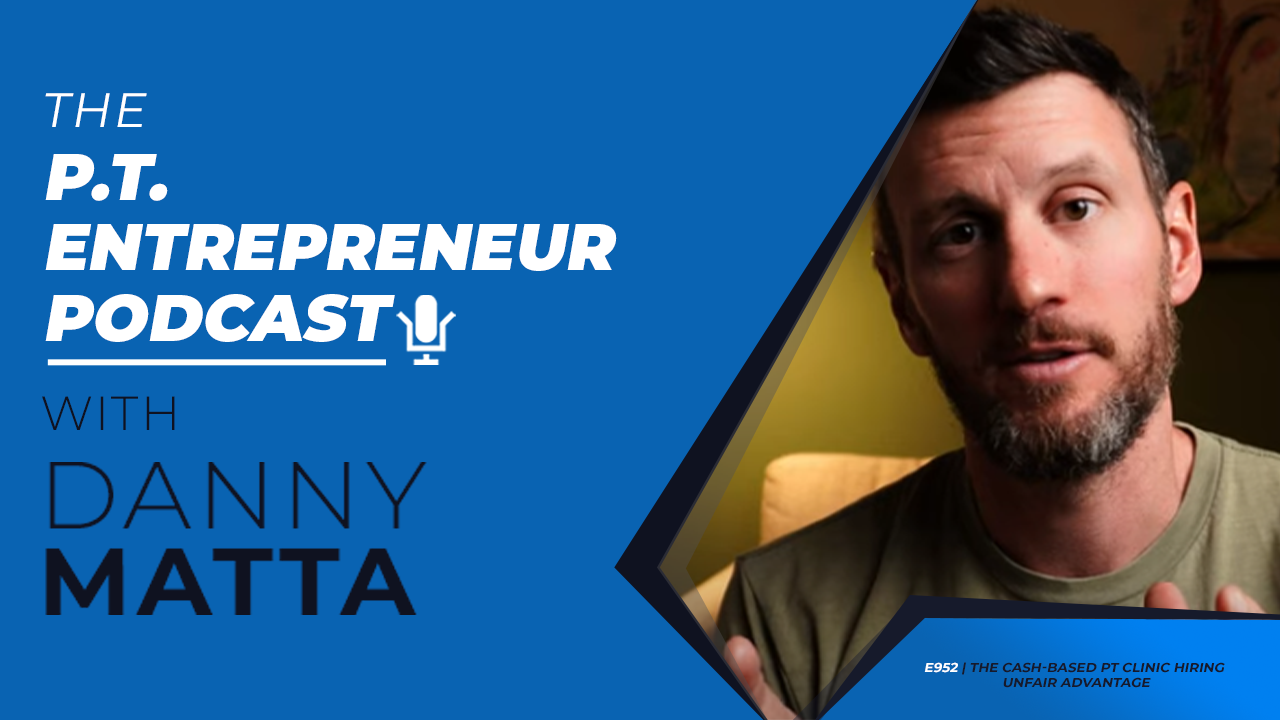
The Hiring Superpower Cash PT Clinics Are Undervaluing
Hiring great physical therapists is getting harder.
Your cash-based clinic isn't just competing against the other independent practices in town.
You're competing against hospital systems.
Large corporate PT companies.
Established private practices.
And increasingly, you're competing against clinicians deciding they would rather leave the profession entirely than continue working in an environment that burns them out.
For a small clinic owner, that can make hiring feel intimidating.
You probably can't match every benefit offered by a massive healthcare system.
You may not be able to offer the highest salary in your market.
Your first potential employee may look at your clinic and wonder whether you're established enough to provide the financial security they need.
But cash-based PT practices have a recruiting advantage that many owners dramatically underestimate.
You can give great clinicians the opportunity to practice physical therapy the way they actually want to practice it.
In this episode of the PT Entrepreneur Podcast, Doc Danny explains why the patient-provider relationship may be your greatest recruiting advantage, how to uncover what clinicians really want from their careers, and why cash practices shouldn't try to win the hiring battle on salary and benefits alone.
Your First PT Hire Will Probably Be the Hardest
Hiring gets easier as the business becomes more established.
Your first staff physical therapist doesn't have much evidence to work with.
They see you.
They see a small clinic.
Maybe they see a relatively young business.
They don't see five other clinicians who have successfully worked there for years.
They don't see a long track record of payroll being made.
They don't see an established organization.
To them, you're still somewhat of a startup.
And startups feel risky.
That's important for owners to acknowledge instead of pretending it doesn't exist.
A physical therapist may have a mortgage.
Student loans.
Kids.
A spouse.
Financial obligations.
Taking a job with your small practice instead of an established hospital system may legitimately feel like a risk.
Established Clinics Have Social Proof for Employees
The equation changes after you've hired successfully.
One clinician becomes two.
Two become three.
The clinic grows.
Your brand becomes more established.
Prospective employees can see that other clinicians have trusted you with their careers.
They can talk to the team.
They can see your patient volume.
They can see that the business has systems.
The perceived risk decreases.
That's one reason the first provider hire can require substantially more effort than the fifth or tenth.
But whether you're hiring employee number one or employee number ten, the same competitive advantage exists.
And it has very little to do with your 401(k).
Your Biggest Hiring Advantage Is the Actual Work
Clinic owners tend to immediately think about compensation when recruiting.
What's the salary?
What are the benefits?
How much PTO?
Do we offer continuing education?
Those things matter.
You need a compensation structure that is competitive enough to attract and retain excellent people.
But compensation isn't the entire job.
A clinician spends most of their working life doing the work.
That means the day-to-day experience matters enormously.
Who are they treating?
How many people are they treating?
Do patients want to be there?
Are patients compliant?
Does the clinician have enough time to think?
Can they use their actual skill set?
Are they proud of the outcomes they're producing?
For the right clinician, those questions can matter more than a marginal difference in salary.
Ask Candidates About the Patient They Would Fight to Treat
Danny recently sat in on an informal interview at Athlete's Potential.
The clinician wasn't a stranger.
She had previously worked with someone already connected to the clinic, which is how many of their best recruiting opportunities develop.
During the conversation, Danny learned what was frustrating her about her current position.
High volume.
Work comp.
Personal injury.
Medicare.
Frequent no-shows.
A patient mix that didn't align particularly well with the type of physical therapy she enjoyed doing.
So Danny asked a different question.
Who is the patient on your schedule that you'd fight another clinician to treat?
That's a much better hiring question than simply asking someone what patient population they like.
It forces them to picture the person who makes them excited to come to work.
Her Perfect Patient Was Already Their Normal Patient
The clinician described someone active.
Someone motivated.
Someone similar to her.
Maybe they're trying to return to running.
Maybe they want to keep playing pickleball.
They care about their health.
They participate in the process.
They want to get better.
The problem was that this type of person represented only a small percentage of her current schedule.
At Athlete's Potential, it was almost the opposite.
The patient she described was remarkably similar to the people the clinic treated all day.
That realization matters.
The recruiting pitch wasn't simply:
Come work at a cash practice.
It was:
Come spend most of your week treating the type of patient you currently wish you could treat more often.
That's a very different value proposition.
Stop Selling "Low Volume" by Itself
Cash practices frequently promote low patient volume when recruiting.
That's valuable.
But Danny argues that it's incomplete.
"You're only going to see seven patients per day" is a feature.
What does that feature actually create?
More time with each patient.
Better relationships.
More ability to think.
Less rushing.
More opportunity to coach.
More opportunity to adjust the plan.
And ideally, more of the patients the clinician genuinely enjoys treating.
That's the real benefit.
You're not simply offering fewer patients.
You're offering a different clinical experience.
The Wrong Work Can Exhaust You More Than More Work
Danny experienced this personally during his military career.
One of his final assignments was at a troop medical clinic attached to Airborne School.
A significant part of the work involved sick call.
There could be dozens of people moving through in a morning.
Because Airborne School is relatively short, many of those interactions weren't built around long-term rehabilitation.
It was often about managing an issue long enough for someone to get through the immediate situation.
Then there were instructors and other military personnel dealing with older injuries and documentation needs as they approached the end of their careers.
The hours weren't necessarily the problem.
The type of work was.
Danny had previously experienced environments where he could do proactive work, strength and conditioning, injury prevention, and deeper clinical problem-solving.
Going from that to repetitive symptom management wore him down.
Burnout Isn't Always About Hours
That's an important distinction for clinic owners trying to understand why clinicians leave jobs.
We often assume burnout means someone is working too much.
Sometimes that's absolutely true.
But two jobs can require similar hours and create completely different levels of exhaustion.
One feels meaningful.
The other drains you.
One lets you use the skills you're proud of.
The other makes you feel like you're simply moving people through the system.
One gives you patients who participate.
The other creates constant frustration around no-shows and noncompliance.
One produces outcomes that remind you why you became a physical therapist.
The other can make you question whether you're even good at your job.
The type of work matters.
Great Clinicians Take Outcomes Personally
This is where cash practices have a unique opportunity.
The clinicians you probably want to hire aren't indifferent about outcomes.
They care.
They think about difficult cases after work.
They want people to improve.
They want to feel like their clinical decisions matter.
Their work becomes part of their identity.
Danny describes it almost like an art.
A great clinician wants an environment where they can practice that art well.
When the environment consistently prevents them from doing that, it becomes demoralizing.
Poor Outcomes Can Erode a Clinician's Confidence
Imagine working with patient populations where the variables are stacked against you.
High no-show rates.
Poor adherence.
Limited time.
Complex incentives.
High volume.
Patients who may not be particularly motivated to return to full function.
You can be an excellent clinician and still struggle to create the outcomes you want.
Eventually, that affects how you feel about yourself professionally.
Maybe you start wondering whether you're actually as good as you thought.
Maybe physical therapy starts feeling less rewarding.
Maybe you stop investing as much energy into improving your craft.
Eventually, maybe you leave the profession.
That's not necessarily because you stopped caring.
It may be because you cared so much that repeatedly being unable to practice the way you wanted became exhausting.
The Right Environment Can Reinvigorate a Career
Now put that same clinician somewhere different.
Give them enough time.
Give them motivated patients.
Give them people who show up.
Give them patients who complete the work between visits.
Give them opportunities to work with populations they're genuinely interested in.
Let them develop relationships.
Let them see the outcome from beginning to end.
Suddenly, the clinician can feel completely different about physical therapy.
They're not necessarily working dramatically fewer hours.
The work itself has changed.
That's the opportunity cash practices should be communicating during recruiting.
Your Patient Population Is an Employee Benefit
This is one of the most important ideas from the episode.
The type of patients your clinic attracts should be considered part of your employee value proposition.
Think about what your clinic actually offers a clinician.
Maybe you specialize in runners.
Golfers.
CrossFit athletes.
Active adults.
Women during and after pregnancy.
Baseball players.
Youth athletes.
Older adults who want to stay strong and independent.
Whatever your niche is, there are clinicians who would love to spend their careers working primarily with those people.
That has value.
You should market it accordingly.
Ask Every Candidate What Their Perfect Schedule Looks Like
Instead of immediately talking about what you need from the employee, learn what they want from the work.
Who do they love treating?
What types of cases energize them?
What patients do they look forward to seeing?
What types of cases drain them?
What do they wish they could do more of clinically?
What frustrates them about their current environment?
Those answers tell you whether your clinic can actually provide something meaningful.
They also tell you whether the candidate fits what you're building.
Help Clinicians Build Their Own Niche
The opportunity gets even stronger when you can help clinicians attract more of the people they want to treat.
Maybe a candidate loves working with golfers.
Great.
What if your clinic helps them build relationships in the local golf community?
Create educational content for golfers.
Run golf workshops.
Develop relationships with teaching professionals.
Build a golf-specific service.
Become known locally for helping golfers stay healthy and perform better.
Now you're not simply offering the clinician a job.
You're helping them develop an area of expertise they're genuinely excited about.
Marketing Can Improve Employee Retention
We normally think of marketing as something that brings patients into the clinic.
But marketing can also improve the employee experience.
If one of your clinicians loves working with runners, your marketing can attract more runners.
If another loves working with baseball players, you can build relationships with baseball organizations.
If another loves pelvic health, you can create content and partnerships around that niche.
Over time, the clinician's schedule becomes increasingly populated with the patients they enjoy most.
That can make the job significantly harder to leave.
You Don't Need Every Patient to Be Perfect
Obviously, no clinician is going to have their absolute dream patient every hour of every day.
That's not realistic.
But there is a huge difference between seeing your favorite patient once every few weeks and seeing that type of person throughout most of your schedule.
The goal is to gradually shift the mix.
If the clinic can consistently attract more of the patients that fit the clinician's interests and strengths, the work becomes more enjoyable.
And when the work becomes more enjoyable, career longevity improves.
Career Longevity Is Part of Compensation
Clinic owners understandably focus on dollars because dollars are easy to measure.
But what is it worth for a clinician to enjoy being a physical therapist again?
What is it worth to finish the day energized instead of depleted?
What is it worth to feel proud of the work?
What is it worth to have patients who actually follow the plan?
What is it worth to have enough time to do a thorough evaluation?
Those things don't appear directly on a pay stub.
They're still valuable.
For some clinicians, they're enormously valuable.
You Probably Can't Beat a Hospital on Benefits
This is where independent clinic owners need to be realistic.
A giant hospital system has scale.
It may have extremely strong health insurance.
Retirement plans.
Large HR departments.
Established benefits packages.
You probably can't recreate all of that as a small cash practice.
Trying to win solely by copying the hospital's offer puts you in a difficult position.
The same applies to high-volume organizations that can generate more revenue per provider by loading schedules.
They may have room to offer compensation structures you can't economically match.
That's okay.
You don't have to beat them at their game.
Compete Where You're Strongest
Your advantage is the work itself.
A lower-volume schedule.
More individualized care.
More control.
Motivated patients.
A stronger patient-provider relationship.
Opportunities to develop a niche.
The ability to actually use the clinical skills someone spent years building.
Potentially more flexibility.
And a clinic culture that values the craft of physical therapy.
Those are meaningful differentiators.
Especially to the kind of clinician you should want to hire.
Your Best Recruiting Message Filters for the Right Person
There's another benefit to positioning the job this way.
It attracts people who care about the same things you care about.
If someone's only priority is maximizing compensation regardless of patient experience, your clinic may not be their best option.
That's fine.
You don't need every physical therapist.
You need the right physical therapists.
The clinician who hears about a lower-volume environment, motivated patients, clinical autonomy, and the ability to build a niche and thinks:
That's exactly how I want to practice.
That's the person you want to keep talking to.
Don't Hide Your Superpower
Cash practice owners sometimes undersell what they've created because they're focused on what they don't have.
You don't have the hospital's benefits.
You don't have the giant corporate recruiting budget.
You don't have 50 locations.
You don't have decades of history.
Especially with your first hire, you may not look particularly impressive on paper.
But you may have something much more important to the right clinician:
A better way to spend their working day.
That's not a small advantage.
For a clinician who takes pride in the craft, wants better outcomes, and wants to stay in the profession for the long term, it may be the deciding factor.
And that's why your patient-provider experience needs to become one of the central pieces of your hiring strategy.
Your Hiring Process Should Sell the Clinical Experience
Once you understand that the real advantage of a cash-based clinic is the work itself, your hiring process has to reflect that.
Too many owners default to a standard job-description approach.
Here's the salary.
Here's the schedule.
Here's the PTO.
Here's the list of responsibilities.
Those things matter, but they don't explain why someone should leave a more established organization to come work for you.
The better conversation is about the day-to-day experience.
Who will they treat?
How often will they get to work with the type of patient they love?
How much autonomy will they have?
How much time will they have with each patient?
What kind of outcomes are realistic in that environment?
What opportunities will they have to develop a niche?
That is the part of the opportunity your competitors may not be able to match.
Don't Just Tell Them the Clinic Is Different
Show them.
Let prospective hires spend time in the clinic.
Let them meet your team.
Let them see the pace of the day.
Let them observe the patient interactions.
Let them see the types of people on the schedule.
If your environment really is better, the contrast should become obvious.
This is especially important for someone coming from a high-volume setting.
A job description can say "lower volume."
Experiencing a clinic where people aren't sprinting between treatment rooms is different.
A job description can say "motivated patients."
Watching patients show up prepared and participate in the process is different.
The environment becomes the recruiting asset.
Ask Better Questions During the Interview
Instead of only evaluating whether the candidate can do the job, use the interview to understand what kind of work they want.
Ask them what they enjoy most about physical therapy.
Ask what currently frustrates them.
Ask what types of patients make them excited to come to work.
Ask what kinds of cases leave them drained.
Ask what they wish they could do more of.
Ask how they want to grow over the next few years.
Those answers help you determine fit.
They also give you the language you need to position your clinic appropriately.
If the candidate says they love working with runners and your clinic sees runners constantly, that's a meaningful match.
If they want to build a golf niche and you have the ability to support that, that matters.
If they want a high-volume environment and their primary motivation is maximizing income, your clinic may not be the right fit.
That's useful information too.
The Best Hire Is Someone Who Values What You Actually Offer
Trying to convince everyone to work for you is a mistake.
You want the person whose priorities line up with the environment you've built.
That person may value clinical autonomy.
They may care about having time to think.
They may want a closer relationship with patients.
They may want to stop treating populations that consistently drain them.
They may want to practice in a way that feels more aligned with why they went into physical therapy in the first place.
Those people are often easier to retain because the job is giving them something they can't easily replace.
Retention Starts Before the First Day
Clinic owners often think of retention as something that happens after hiring.
In reality, it starts during recruiting.
If you accurately describe the work, attract people who value that work, and build expectations around the real experience, you're starting from alignment.
That matters.
A poor fit can be expensive even if the person is clinically strong.
If they don't value the environment you're offering, the things you think are advantages won't feel valuable to them.
On the other hand, if they specifically came because they wanted that kind of patient population, pace, and clinical freedom, the job has a much stronger foundation.
Your Team Shouldn't Feel Like They Have to Escape Physical Therapy
One of the strongest ideas in this episode is career longevity.
There are talented physical therapists who don't necessarily dislike the profession.
They dislike the way they're being asked to practice it.
That's different.
If someone is treating high volume, constantly behind, spending limited time with patients, dealing with frequent no-shows, and struggling to create meaningful outcomes, they may eventually decide PT itself is the problem.
A better environment can change that.
Your clinic can become the place where a clinician realizes they don't actually need to leave the profession.
They needed a different version of it.
That's a powerful recruiting message.
It's also a meaningful responsibility for clinic owners.
Build the Job You Wish You Had
Many cash practice owners started because they were dissatisfied employees.
They wanted better patient care.
More autonomy.
A different schedule.
More control.
Better economics.
Now that you're the owner, you have the opportunity to create that environment for someone else.
Think about the job you wish existed when you were frustrated.
What would have made you stay?
What would have made you excited to go to work?
What type of patients would you have wanted?
What schedule would have made the career sustainable?
What kind of leadership would you have wanted?
Those questions can help you design a role that is genuinely differentiated.
Don't Destroy the Advantage as You Scale
This is where growing clinics have to be careful.
The same economic pressure that exists in traditional PT can eventually show up inside a cash practice if the owner isn't paying attention.
You hire more clinicians.
Overhead increases.
Margins get tighter.
Then the temptation appears:
Add more visits.
Shorten appointments.
Increase volume.
Pack the schedule.
That's dangerous.
If the environment that helped you recruit great clinicians disappears, so does your advantage.
The goal is not to recreate the exact model you were trying to escape.
Protect the Patient-Provider Relationship
The core asset is the relationship between the clinician and the patient.
Protect it.
Give clinicians enough time to listen.
Give them enough time to think.
Give them enough time to coach.
Create expectations around patient participation.
Build your marketing around patients who value the service.
Develop offers and pricing that support the model economically.
Your business systems should protect the clinical experience instead of slowly eroding it.
That is what makes the model sustainable for both patients and providers.
Premium Pricing Supports Better Jobs
There is also an economic reality here.
You can't provide a premium clinical experience indefinitely with weak unit economics.
If your average visit rate is too low, eventually something has to give.
Owner profit.
Staff compensation.
Benefits.
Appointment length.
Marketing.
Facility quality.
Something gets squeezed.
That's why pricing isn't simply about how much the owner wants to make.
Healthy pricing can support better jobs.
It can support lower volume.
It can support better compensation.
It can support administrative help.
It can support continuing education.
It can support the environment that makes your clinic attractive to excellent clinicians.
Better Retention Makes the Business Stronger
The financial impact of keeping great clinicians is significant.
Every time a provider leaves, you lose more than an employee.
You lose capacity.
Patients may have to transition.
Referral relationships can be disrupted.
The owner has to recruit again.
Then interview.
Then onboard.
Then train.
Then rebuild the new provider's schedule.
That costs time and money.
A clinic that can retain clinicians for years is fundamentally easier to scale than one constantly replacing them.
This is one reason culture and the clinical environment aren't "soft" business concepts.
They directly affect economics.
Great Clinicians Can Become Super Brand Ambassadors
A clinician who genuinely loves working at your clinic becomes more than an employee.
They talk about the job.
They tell other PTs.
They refer former classmates.
They attract people from their professional network.
They become a Super Brand Ambassador for the clinic.
That's powerful because clinicians trust other clinicians.
If one of your PTs tells a former coworker, "You would love working here," that recommendation carries far more weight than a job advertisement.
Over time, a great team can become your best recruiting engine.
Referrals May Be Better Than Job Boards
Danny notes that Athlete's Potential rarely relies on traditional job advertising.
Many of their hires come through people already connected to the clinic.
That makes sense.
A trusted employee already understands the culture.
They understand the expectations.
They know who would fit.
They also have to work with the person they refer, so there is a natural incentive to recommend someone strong.
This creates a useful filter before the formal hiring process even begins.
Make Employee Referrals Worth Something
If your team introduces you to an exceptional clinician, reward them.
A meaningful referral bonus can be a much better use of recruiting dollars than endlessly paying job boards.
You can even structure it in stages.
Part when the clinician starts.
Part after they've stayed for a defined period.
That rewards the employee for helping you find someone who becomes a successful long-term addition to the team.
The exact amount depends on your economics.
The principle is what matters.
Treat great recruiting referrals as valuable.
Because they are.
Your Existing Team Protects the Culture
Another advantage appears as the team grows.
Good employees don't want bad employees joining the clinic.
They care about who they work with.
They care about the patient experience.
They care about whether the next clinician is dependable.
They care about whether that person fits the culture.
As your team matures, recruiting becomes less dependent on the owner evaluating everything alone.
Your clinicians can help protect the standard.
That is part of what makes later hires easier than the first.
You Still Need Competitive Compensation
None of this means you can underpay people because the job is enjoyable.
That's not the message.
You still need compensation that makes sense.
You still need to understand benefits.
You still need appropriate PTO.
You still need a clear schedule.
You still need to make the role financially sustainable for the employee.
The point is that compensation doesn't have to carry the entire recruiting burden.
If you're moderately competitive financially and substantially better in the quality of the work, that can be enough to win the right candidate.
Don't Cripple the Business With Compensation Either
The opposite mistake is overpaying simply because you're afraid you won't find anyone.
That can create a compensation model the business cannot support.
If the provider has to generate unrealistic revenue just to cover their own cost, you've created another problem.
This is where owners need to understand the numbers.
Revenue per provider.
Capacity.
Payroll percentage.
Benefits.
Administrative costs.
Marketing.
Profit.
A compensation plan has to work for both sides.
The clinician should feel valued.
The business has to remain healthy.
Hiring Is an Economics Problem and a Leadership Problem
This is why bringing on a provider can feel complicated.
You're not simply finding a PT.
You're designing a role.
Setting compensation.
Defining expectations.
Creating enough demand to fill the schedule.
Onboarding.
Training.
Managing.
Retaining.
And making sure the person can contribute financially without destroying the patient experience.
That's a lot.
Which is why the first provider hire often feels so intimidating.
But it becomes much easier when you understand what actually makes your clinic different.
Your Marketing System Supports Your Hiring System
There is another connection here.
A great clinical job only stays great if you can consistently attract the right patients.
If you hire someone who loves working with runners but can't generate enough runner demand, eventually their schedule gets filled with whatever happens to come through the door.
That's why recruiting and marketing aren't separate systems.
If you're promising clinicians opportunities to develop niches, the business has to know how to create demand around those niches.
Content.
Workshops.
Referral relationships.
Community partnerships.
Paid marketing.
Local outreach.
All of these can support the employee experience.
A Filled Schedule Isn't Enough
From a purely financial perspective, you may only care whether the clinician's schedule is full.
But from a retention perspective, what's filling it matters.
Eight patients they hate treating every day isn't necessarily a win.
Eight people who align with their interests and expertise is different.
As the business becomes more sophisticated, you should increasingly pay attention to the mix.
What patients are each clinician particularly good with?
Where do they have unique expertise?
What populations energize them?
Can your marketing create more of those opportunities?
That's how a team begins developing into something stronger than a group of interchangeable providers.
Niche Expertise Can Strengthen the Entire Brand
One clinician may become known for runners.
Another for golfers.
Another for women's health.
Another for strength athletes.
Another for older adults.
That gives the clinic multiple reasons for people in the community to know you.
It also gives clinicians room to build professional identities inside the larger brand.
That's good for them.
It's good for patients.
And it's good for the business.
The clinic becomes more valuable as the team's expertise becomes more diverse.
Hiring Great People Creates a Compounding Effect
Once you have the right first provider, several things can start compounding.
They treat patients well.
Those patients refer people.
The provider develops a reputation.
Their schedule grows.
They help improve the clinic.
They refer another talented clinician.
That new clinician brings another network.
The brand gets stronger.
Recruiting becomes easier.
The clinic becomes more stable.
This is another version of the Compounding Clinic.
Great people create opportunities for more great people.
Protect Career Longevity and You Protect the Business
A clinic filled with burned-out providers isn't stable.
Eventually, people leave.
Quality declines.
Patients feel it.
Culture suffers.
Recruiting becomes harder.
The owner gets pulled back into patient care.
Growth stalls.
Protecting the work experience helps prevent that cycle.
If clinicians can actually imagine themselves doing the job for years, your business becomes much more resilient.
The Right Job Can Make Someone Love PT Again
There is a powerful moment when a clinician realizes:
I don't hate physical therapy. I hated the environment I was doing it in.
That may be the greatest recruiting advantage a cash practice can create.
Not the fanciest facility.
Not the biggest benefits package.
Not a flashy job title.
A place where a talented physical therapist can enjoy being a physical therapist again.
That's difficult to put a dollar value on.
But for the right person, it can outweigh a lot.
Technology Spotlight
Documentation continues to be one of the biggest frustrations for physical therapists.
Claire is an AI scribe built specifically for PTs that dramatically reduces documentation time, allowing clinicians to focus on patient care instead of paperwork.
For clinic owners trying to create better jobs, this matters. Documentation burden is part of the day-to-day employee experience. The more efficiently clinicians can handle notes, the more energy they can put toward patients and the clinical work they actually enjoy.
👉 Try Claire free for 7 days
https://www.meetclaire.ai/?utm_source=preroll&utm_medium=podcast&utm_campaign=pt_entrepreneurs
More PT Biz Training
Want more content on building a scalable cash practice?
👉 PT Biz Training YouTube
https://www.youtube.com/@ptbiztraining
Final Thoughts
You probably aren't going to beat a giant hospital system at being a giant hospital system.
Don't try.
Your cash-based practice has a different advantage.
You can create an environment where great clinicians have time to think, build relationships, work with motivated patients, develop areas of expertise, and see the outcomes that remind them why they became physical therapists.
That is your hiring superpower.
So the next time you're recruiting, don't spend the entire conversation talking about salary, PTO, and benefits.
Ask candidates who they love treating.
Ask what makes them proud of their work.
Ask what is wearing them down in their current job.
Then show them how your clinic can provide a better way to practice.
You still need fair compensation.
You still need strong systems.
You still need to understand the economics of the hire.
But if you can build a clinic where talented providers genuinely love the work they're doing, hiring becomes easier, retention improves, and the entire business gets stronger.
Don't overlook the thing your biggest competitors may have the hardest time replicating:
A great place to actually practice physical therapy.